





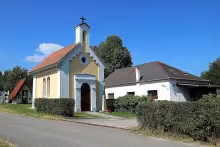
Skláře, also known as Glaserau in German, was a vanished settlement within Mnichov municipality in the Plzeňský kraj region of the Czech Republic. Originating from glassworks operations, it had significant ties to the Augustinian monks of Pivoně. First documented in 1586, Skláře offers insights into the socio-economic dynamics of its era, particularly through its connections with religious institutions and industrial activities.
The village's history is marked by notable events such as depopulation following World War II due to the expulsion of German inhabitants, leading to its eventual abandonment. Its origins are closely linked to glassworks established under the auspices of Augustinian monks from Pivoně, highlighting Skláře’s role in Bohemia's economic and religious landscape during the late 16th century when it was part of the Habsburg Monarchy.
The first documented mention of Skláře dates back to 1586, with another reference appearing in 1654. By 1838, cadastral records depicted it as a small settlement featuring several homesteads around a minor square, indicating its modest yet significant presence. Architecturally, the village developed around its glassworks operations, consisting of several homesteads surrounding a small square by the early 19th century.
Ownership was initially held by the Augustinian monks of Pivoně from its inception, underscoring their religious influence on the village's development and administration. Post-World War II details regarding ownership are not specified due to depopulation and abandonment.
Key events include its first documented mention in 1586 and stable cadastral records established by 1838. The most dramatic change occurred after World War II when the expulsion of German inhabitants led to depopulation, with the village later serving as a source for building materials. Notably, a tavern continued operating until 1991, suggesting some resilience.
Today, Skláře exists only as a historical site within Mnichov municipality. The area features typical rural characteristics of the Plzeňský kraj region and lies near Pivoně, Valtířov, and Postřekov. While no structures remain to visit, its history offers valuable insights into socio-economic transformations in Bohemia over centuries.
Skláře serves as a poignant reminder of human settlements' impermanence and the enduring impact of historical events on local communities. Its story invites reflection on the complex interplay between industry, religion, and geopolitics in shaping regional histories. For those interested in Czech history, Skláře provides an intriguing narrative worth considering during a visit to the Plzeňský kraj region.
Historical milestones
- 1586
- First documented mention of Skláře.
- 1654
- Second documented mention of the village.
- 1838
- Stable cadastral records show a small settlement with several homesteads.
Architectural development
Skláře developed as a village centered around glassworks operations. By the early 19th century, it consisted of several homesteads surrounding a small square. The village's infrastructure included a tavern that remained operational for some time after depopulation.
Historical events
First documented mention in 1586, indicating the village's existence during this time.
Stable cadastral records established in 1838, showing a small settlement with several homesteads around a minor square.
Post-World War II expulsion of German inhabitants led to depopulation and eventual abandonment.
Owners
Initially owned by the Augustinian monks of Pivoně from its inception until at least the early modern period. Post-World War II ownership details are not specified due to depopulation and subsequent abandonment.
Points of interest
- Skláře's glassworks were among the early industrial operations in Bohemia, showcasing advanced techniques that contributed to the region’s reputation for high-quality glass production during the late 16th century.
- The Augustinian monks of Pivoně not only managed Skláře but also played a crucial role in spreading religious and cultural influences throughout the Plzeňský kraj, integrating spiritual life with economic activities like glassmaking.
Guide
Show guide text
Welcome to the site of Skláře, a historical gem nestled within the municipality of Mnichov in the Plzeňský kraj region. As you stand here, imagine the echoes of history surrounding you, where once a vibrant settlement thrived.
Skláře first emerged from the industrious spirit of glassmaking, documented as early as 1586. This village sprang to life through its connection with skilled artisans and the Augustinian monks of Pivoně, who played a pivotal role in managing this community. The area was renowned for its glassworks, one of Bohemia's earliest industrial operations, showcasing advanced techniques that contributed significantly to the region’s reputation for high-quality glass production during the late 16th century.
As you take in your surroundings, envision the modest homesteads and workshops that once dotted this landscape. Although no structures remain today, the site whispers tales of its past through the very land upon which it stands. The cadastral records from 1838 indicate a small settlement with several homesteads, hinting at the industrious life that unfolded here.
The Augustinian monks were central to Skláře's story, not only managing the glassworks but also nurturing the community’s spiritual and economic growth. Their influence extended beyond mere administration; they were custodians of knowledge and skill in an era where such expertise was invaluable.
One intriguing aspect of Skláře is its transformation through time, particularly after World War II when depopulation occurred due to the expulsion of its residents. This historical pivot marks a poignant chapter in the village's narrative, reflecting broader regional changes during that period.
As you explore this site, let your imagination wander and consider the lives intertwined with these lands. What stories might they tell if walls could speak? How did the community evolve from its industrious beginnings to its eventual silence?
We invite you to continue exploring Mnichov and its surroundings, where history is etched into every corner. Thank you for joining us on this journey through time at Skláře. May your curiosity lead you to many more discoveries. Safe travels!
Tips for visitors
The best time to visit the site of Skláře is during late spring or early autumn when the weather is mild, and the surrounding countryside is lush and vibrant. This period offers pleasant temperatures for exploring the area on foot and enjoying the natural beauty without the discomfort of summer heat or winter cold. Additionally, visiting during these times allows you to experience local festivals or events that might be taking place in the nearby villages of Pivoně, Valtířov, and Postřekov.
Parking is available near the site, but it's advisable to check for any restrictions or permits required beforehand. Public transportation can also be used to reach Mnichov; however, specific bus routes should be verified through a local transport website or app. If planning to visit by car, ensure that you have enough fuel and familiarize yourself with the road conditions in rural areas.
When visiting Skláře, it's recommended to bring comfortable walking shoes as there may be uneven terrain around the site. A hat, sunscreen, and water are also advisable due to potential exposure to sunlight during your visit. Additionally, consider bringing a camera or smartphone with a good camera for capturing photos of the landscape and any historical remnants you might find.
For photography enthusiasts, early morning or late afternoon offers the best natural lighting conditions at Skláře. The soft light during these times can accentuate textures and create dramatic shadows, enhancing the visual appeal of the site's surroundings. While there may not be specific 'photo spots,' exploring the area around Pivoně can provide picturesque rural scenes.
Within a 30-minute drive from Skláře, visitors can explore nearby attractions such as Valtířov and Postřekov. These villages offer insights into local culture and history, with opportunities to visit traditional farms or small museums. For families with children, these areas might also have open spaces suitable for picnics or leisurely walks.
Businesses nearby
Do you run a restaurant, accommodation, shop, museum, rental, wellness or other visitor service near this monument? Show yourself directly to the people heading to it — this is how they will see you in the app and on the web:
Nearby
Skláře is located near Pivoně and close to Valtířov and Postřekov. The surrounding landscape includes typical rural features of the Plzeňský kraj region.
Accommodation nearby
Themed route
Tematická výletní trasa: Skláře a okolí
1. Skláře (sídelní útvar) *Typ:* Historické sídlo *Proč stojí za návštěvu:* Navštivte tento klíčový bod, kde můžete prozkoumat historii a architekturu tohoto jedinečného sídelního útvaru. Skláře je známé svým bohatým dědictvím sklářských řemesel, což vám poskytne pohled do minulosti této oblasti.
2. Pivoně *Typ:* Místní osada *Proč stojí za návštěvu:* Pivoně je blízké Sklárům a nabízí pohled na typickou venkovskou krajinu Plzeňského kraje. Navštívte tuto malou osadu, abyste si užili klidný zážitek v přírodním prostředí a prozkoumali místní kulturu.
3. Valtířov *Typ:* Místní obec *Proč stojí za návštěvu:* Valtířov je další zajímavý bod na trase, který vás dovede hlouběji do venkovského života Plzeňského kraje. Tato obec nabízí možnost prozkoumat místní zvyky a tradice, což je skvělá příležitost poznat region od jiné stránky.
4. Postřekov *Typ:* Místní obec *Proč stojí za návštěvu:* Postřekov uzavírá tuto trasu, nabízející další pohled na venkovskou krajinu a život v Plzeňském kraji. Tato obec je ideálním místem pro ukončení vašeho výletu, kde si můžete užít klidné chvíle a připomenout si své zážitky.
Tato trasa nabízí pohled na historii, kulturu a venkovskou krásu oblasti kolem Sklárů v okrese Mnichov.
Seasonal recommendations
Spring: Visiting the Skláře historical site in Plzeň during spring offers a unique experience as nature begins to awaken, with blooming flowers and fresh greenery enhancing the beauty of the area. The soft morning light provides excellent natural illumination for photography, capturing the intricate details of the building's architecture against a vibrant backdrop. It’s advisable to wear layers since temperatures can vary throughout the day; mornings may be cool while afternoons warm up. This season is generally less crowded than summer, making it an ideal time to explore at your own pace.
Summer: The Skláře site in Plzeň during summer exudes a lively atmosphere as visitors enjoy longer daylight hours and pleasant weather, perfect for leisurely exploration of the historical architecture. Summer evenings can be particularly enchanting with warm hues from the setting sun casting dramatic shadows across the structures. However, it's wise to visit early in the morning or late afternoon to avoid peak tourist times when crowds are at their highest. Comfortable walking shoes and light clothing are recommended due to warmer temperatures.
Autumn: Autumn brings a magical transformation to the Skláře site with its rich tapestry of reds, oranges, and yellows adorning the surrounding landscape. The soft autumnal light creates an atmospheric glow that enhances the historical charm of the buildings. As days become shorter, it's best to plan visits earlier in the day to make the most of natural lighting. Layered clothing is advisable as temperatures can drop significantly by evening, and carrying a light jacket or sweater will ensure comfort during your visit.
Winter: The Skláře site in winter offers a serene and picturesque experience, with snow-covered landscapes providing a stark yet beautiful contrast against the historical architecture. Shorter days mean that visits are best planned early to take advantage of daylight hours, as sites may close earlier due to reduced lighting. Winter attire is essential; warm clothing, including hats, gloves, and boots, will keep you comfortable in colder temperatures. The site's quieter atmosphere during this season allows for a peaceful exploration away from the summer crowds.
Visualizations and artistic views

Vizualizace jsou generovány umělou inteligencí a slouží jako inspirace.
Tips from visitors
No tips yet. Be the first!
Log in and add your tip.



Reviews and comments