




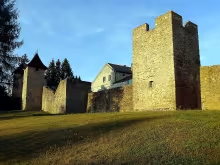
The Městské opevnění in Tachov is a remarkable example of medieval fortifications surrounding the historic core of this town in Plzeňský kraj. Known for its exceptional preservation, these walls are among the most complete urban defensive systems not only in the Czech Republic but also across Western Bohemia and Bavaria. Constructed likely at the end of the 13th century during King Přemysl Otakar II's reign, they underwent significant enhancements under the Luxembourg dynasty. Today, these walls stand as a protected cultural monument, hosting annual cultural events that attract visitors to this historic site.
The origins of Tachov’s city walls date back to the late 13th century when King Přemysl Otakar II was expanding his influence across Central Europe. This period marked significant political and territorial consolidation in Bohemia amidst broader European conflicts such as the Crusades. The walls were likely built shortly after Tachov's establishment by the king, reflecting its strategic importance during this era of expansion. Under the Luxembourg dynasty, particularly during the reigns of John of Luxembourg and his son Charles IV, the walls underwent major enhancements that contributed to their current form.
Architecturally, the Městské opevnění features an irregular circular layout with limestone walls that are 1.4 to 1.5 meters thick and stand between eight to ten meters high. These formidable structures were further strengthened by 26 corner towers, of which 21 have survived to this day. The design reflects the military architectural practices of the time, emphasizing both strength and functionality in urban defense.
Throughout its history, Tachov's city walls witnessed dramatic changes in ownership and fortune. Initially established by King Přemysl Otakar II, Tachov was frequently pawned to various noble families and had to be redeemed multiple times by Czech rulers. Notably, it was pawned in 1323 under John of Luxembourg and later redeemed by his son Charles IV. These shifts in ownership reflect the turbulent political landscape of medieval Bohemia.
Key events in the history of Tachov's walls include their siege during the Hussite Wars in 1427 when Prokop Holý led Hussite forces to capture the town, resulting in significant destruction and loss of life. The Thirty Years' War further devastated Tachov between 1641 and 1648 as Swedish troops repeatedly burned and ravaged the area. Despite these tumultuous events, parts of the walls were demolished in the 19th century to facilitate urban development, including the removal of all three original city gates.
Today, the Městské opevnění is a well-preserved cultural monument that offers visitors a glimpse into Tachov's rich history. The site is accessible and hosts various cultural events annually, particularly during the second weekend of August. Streets named Husitská and Krvavá commemorate the Hussite siege, adding to the historical ambiance of the area. These walls not only serve as a testament to medieval military architecture but also as a symbol of Tachov's resilience through centuries of conflict and change.
Visiting the Městské opevnění in Tachov offers an opportunity to explore one of the most complete urban defensive systems in Europe, providing insight into the region’s historical significance. The site is not only a testament to medieval fortification techniques but also a vibrant cultural venue that continues to celebrate its storied past. Whether drawn by history or culture, Tachov's city walls promise an enriching experience for all who visit.
Historical milestones
- end of the 13th century
- The establishment of urban fortifications in Tachov during the reign of King Přemysl Otakar II.
- 1323
- Tachov was pledged as collateral to Jan Lucemburský.
- 1427
- The siege of Tachov during the Hussite Wars by Prokop Holý.
- 1641-1648
- Tachov suffered destruction during the Thirty Years' War.
- 19th century
- Demolition of parts of the fortifications for urban development, including the removal of gates.
Architectural development
The walls were originally built at the end of the 13th century and underwent major enhancements during the Luxembourg dynasty's rule. They feature irregular circular layouts with limestone walls, strengthened by 26 corner towers, of which 21 have survived.
Historical events
In 1427, during the Hussite Wars, Tachov was besieged and captured by Hussite forces led by Prokop Holý, resulting in significant destruction and loss of life.
The Thirty Years' War saw Tachov repeatedly devastated by Swedish troops between 1641 and 1648.
Owners
Initially established by King Přemysl Otakar II in the late 13th century, Tachov was frequently pawned to various noble families and had to be redeemed multiple times by Czech rulers. Notably, it was pawned in 1323 under John of Luxembourg and later redeemed by his son Charles IV.
Points of interest
- The Městské opevnění's irregular circular layout was an innovative design for its time, reflecting the unique topography of Tachov and providing strategic advantages in defense against attackers.
- During their construction, it is believed that local legends arose about hidden tunnels beneath the walls, supposedly used by defenders to secretly move supplies or escape during sieges. These tales add a layer of mystery to the site's history.
Guide
Show guide text
Welcome to the historic heart of Tachov, where you stand before an enduring testament to medieval ingenuity—the Městské opevnění, or City Walls. As you gaze upon this remarkable structure, imagine yourself stepping back in time to a period when these walls stood as guardians of the town. Their impressive stature and well-preserved condition offer a vivid glimpse into the past.
The construction of Tachov's city walls likely dates back to the late 13th century during the reign of King Přemysl Otakar II. Crafted with strategic precision, these fortifications were designed not only for defense but also as a statement of power and protection in an era marked by frequent conflicts. The irregular circular layout of the walls is particularly noteworthy; it was an innovative design that harmonized with Tachov's unique topography, providing both aesthetic appeal and tactical advantages.
As you continue to explore this site, take a moment to appreciate its architectural nuances. Notice how the walls encircle the historic core of Tachov, creating a seamless blend of natural landscape and man-made defense. Although specific architects remain unknown, the craftsmanship is evident in every stone that has withstood the test of time.
The history of these walls is rich with stories and significant figures. In 1323, Tachov was pledged as collateral to Jan Lucemburský, a testament to its strategic importance during turbulent times. The city also played a role in the Hussite Wars; in 1427, it faced an assault led by Prokop Holý. Later, during the Thirty Years' War from 1641 to 1648, Tachov endured destruction that tested the resilience of these fortifications.
An intriguing aspect of the Městské opevnění is the local legends that have emerged over time. Whispered tales speak of hidden tunnels beneath the walls, adding a layer of mystery and allure to this historic site. While these stories remain unverified, they invite curiosity and imagination about what secrets might lie beneath.
As you conclude your visit, consider exploring further into Tachov's rich history and cultural heritage. The city walls are just one chapter in a story that spans centuries. Thank you for joining us on this journey through time, and we hope to see you again soon as you continue to uncover the wonders of Tachov.
---
Feel free to explore more about Tachov’s historical treasures and let your curiosity guide you through its storied past. Safe travels!
Tips for visitors
The best time to visit the Tachov City Walls is during late spring or early autumn, when the weather is mild and pleasant for walking around the historic core. These seasons offer comfortable temperatures and fewer crowds compared to summer, allowing you to fully appreciate the medieval architecture without the hustle of peak tourist times. Additionally, visiting in these months provides an opportunity to see the surrounding landscapes in bloom or with vibrant fall colors, enhancing your experience.
Parking is available near Tachov, but it's advisable to check for specific parking areas as they may vary depending on events or local regulations. Public transportation can also be a convenient option; you can reach Tachov using regional trains and buses from nearby cities such as Plzeň. For the most current travel schedules and routes, consult a reliable transport app or website before your trip.
When visiting the Tachov City Walls, it's recommended to bring comfortable walking shoes as exploring the area involves some strolling on uneven surfaces. A light jacket is advisable due to occasional temperature changes, especially in spring or autumn. Don't forget a water bottle and perhaps a camera to capture the stunning views of the historic walls and surrounding landscapes.
For photography enthusiasts, the best spots around Tachov City Walls are those that offer panoramic views of the town and its fortifications. Early morning light can provide soft illumination for capturing the medieval architecture in detail, while late afternoon offers warm golden hues. The area is also picturesque during sunset when shadows cast by the walls create dramatic effects.
Nearby attractions within a 30-minute drive include other cultural sites such as local museums or historical landmarks that showcase the region's rich history. Exploring these can provide additional context to Tachov’s heritage and allow for a more comprehensive understanding of Western Bohemia's past.
Businesses nearby
Do you run a restaurant, accommodation, shop, museum, rental, wellness or other visitor service near this monument? Show yourself directly to the people heading to it — this is how they will see you in the app and on the web:
Nearby
Tachov is located near the border with Germany, surrounded by picturesque landscapes typical of Western Bohemia. The area includes other cultural sites and natural features within a 5 km radius.
Accommodation nearby
Themed route
Tachov Thematic Tour
1. Městské opevnění (Tachov) - *Typ:* Hradby a historický areál - *Proč stojí za návštěvu:* Městské opevnění Tachova je vynikajícím příkladem gotických hradbách z 13. století, které nabízejí pohled na historii a architekturu této oblasti. Navštivte nádvoří pro impozantní panoramatický vzhled na město a okolní krajinu.
2. Kostel svatého Jiljí - *Typ:* Historický kostel - *Proč stojí za návštěvu:* Tento gotický kostel, nacházející se v centru Tachova, je známý svou architektonickou krásou a historickými freskami. Je to ideální místo pro ty, kteří mají zájem o duchovní a kulturní dědictví města.
3. Muzeum Tachova - *Typ:* Muzeum - *Proč stojí za návštěvu:* Muzeum nabízí rozsáhlou expozici, která zobrazuje historii a kulturu Tachova. Od archeologických nálezů po moderní umění, je to nezbytné místo pro porozumění místnímu dědictví.
4. Pivovar Třešňák - *Typ:* Pivovar a restaurace - *Proč stojí za návštěvu:* Navštívte tento tradiční pivovar pro degustaci místních piva. Je to nejen místo, kde si užijete výborné pivo, ale také kde se dozvíte více o historii a procesu pěstování piva v Tachově.
5. Pivovarská zahrada - *Typ:* Zahrada - *Proč stojí za návštěvu:* Pivovarská zahrada nabízí klidný prostor k odpočinku a užívání si pohledů na místní krajinu. Je to ideální místo pro relaxaci po prozkoumání historických památek.
Tato trasa vás provede skrze kulturní a historické aspekty Tachova, nabízející kombinaci architektonických divů, uměleckých expozic a místních gastronomických zkušeností.
Seasonal recommendations
Jaro: In the spring, Tachov's City Fortifications come alive with incredible vibrancy as newly bloomed flowers and trees add colorful hues to the atmosphere. Sunlight illuminating the ancient ramparts creates a beautiful experience that further enriches the historical character of this heritage site. When visiting in spring, it is advisable to be prepared for possible rain and dress accordingly with a waterproof outer layer. Additionally, this time is ideal for a quiet stroll without large crowds, allowing visitors to appreciate the details of both architecture and natural surroundings.
Léto: Summer brings the largest influx of tourists to the City Fortifications during the main summer season when many gather to enjoy sunny days. High temperatures and clear skies offer perfect conditions for long walks and photographic fun in full daylight. Visitors are recommended to visit the site early in the morning or in the evening to avoid heat and crowds. Warm clothing, sun protection, and plenty of drinking water are essential for a comfortable visit.
Podzim: In autumn, the City Fortifications transform into a romantic refuge as tree leaves take on golden and reddish hues. Sunny days are frequent, allowing for an enjoyable walk with beautiful lighting that highlights the historical ramparts. The atmosphere is more tranquil than in summer, enabling visitors to enjoy natural beauty and architectural details without concern for large crowds. Clothing should be suitable for cooler weather with a possibility of rain to ensure comfort throughout the day.
Zima: During winter, Tachov's City Fortifications take on a unique atmosphere as cold and snow add fantastical beauty to the historic ramparts. Sunrise and sunset light up the ruins in ways that are entirely different from other seasons, making it ideal for photographers. In the Advent period, surrounding areas may be enlivened by various events and attractions, but the fortifications themselves remain a peaceful refuge. Visitors should prepare for cold temperatures and shorter opening hours, so it is advisable to dress warmly and visit the site early in the day.
Visualizations and artistic views

Vizualizace jsou generovány umělou inteligencí a slouží jako inspirace.


Tips from visitors
No tips yet. Be the first!
Log in and add your tip.



Reviews and comments