




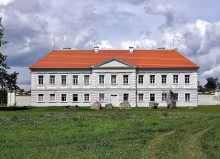
Leopoldsruhe is a former hunting lodge located in Velký Dvůr, Pohořelice, within the Brno-venkov district of the South Moravian Region. Constructed shortly after 1743 by František Antonín Grimm for Jan Leopold z Ditrichštejna, it stands as a notable example of Baroque architecture. Recognized as a cultural monument of the Czech Republic, the lodge has undergone various transformations over its history, serving state employees and later becoming a social center for youth.
The origins of Leopoldsruhe trace back to the mid-18th century when Bohemia was part of the Habsburg Monarchy under Empress Maria Theresa. During this period, significant cultural and architectural developments occurred across Europe. The lodge was commissioned by Jan Leopold z Ditrichštejna following his acquisition of Velký Dvůr as part of a larger estate purchase. Its construction reflects the Baroque style prevalent at the time, characterized by its U-shaped single-story layout and ornamental courtyard.
Architecturally, Leopoldsruhe was designed with functionality and aesthetics typical of hunting lodges from that era. The building features a U-shaped structure complemented by an enclosed courtyard surrounded by walls and two agricultural buildings. In the early 19th century, Albert Sasko-Těšínský expanded the site by adding an enclosing wall and establishing a park around it, enhancing its architectural appeal.
Ownership of Leopoldsruhe has seen several changes over the centuries. Initially built for Jan Leopold z Ditrichštejna, the lodge later came under the ownership of Albert Sasko-Těšínský in the early 19th century. Following World War I, it was nationalized and became part of Czechoslovak state assets managed by Československé státní lesy a statky. After World War II, the property fell under the administration of Československé státní statky until 1989 when it was taken over by the state.
Throughout its history, Leopoldsruhe has served various purposes. In the early 20th century, it housed Czech state employees and later functioned as an educational facility for working youth. By the mid-20th century, the lodge had deteriorated significantly but continued to be used for different community functions, including as a cultural center and school classroom. After being severely damaged by the end of the 20th century, restoration efforts began in 2002 under the management of Sdružení pěstounských rodin, with support from European Union funding.
Today, Leopoldsruhe stands restored and serves as a social center for youth, known as Dům na půli cesty. The site is accessible to visitors interested in exploring its rich history and architectural significance. Its transformation from a hunting retreat to a community hub highlights the adaptive reuse of historical structures. Visitors can appreciate not only the architectural beauty of Leopoldsruhe but also its role in the cultural and social fabric of Pohořelice.
Leopoldsruhe offers a unique glimpse into the past, showcasing the evolution of architecture and land use over centuries. Its restoration underscores the importance of preserving historical monuments for future generations. Visitors are invited to explore this remarkable site, where history and modernity converge in a testament to cultural heritage and community resilience.
Historical milestones
- 1743
- Construction of Leopoldsruhe by František Antonín Grimm.
- Early 19th century
- Albert Sasko-Těšínský expanded the site with a wall and park.
- Post-World War I
- Leopoldsruhe nationalized, became Czechoslovak state asset.
- Post-World War II
- Managed by Československé státní statky until 1989.
- 2002
- Restoration efforts began under Sdružení pěstounských rodin.
Architectural development
Leopoldsruhe was originally built as a Baroque hunting lodge with a U-shaped layout. In the early 19th century, Albert Sasko-Těšínský added an enclosing wall and established a park around it. The building underwent significant deterioration over time but was restored between 2002-2007 by Sdružení pěstounských rodin.
Historical events
Construction completed shortly after 1743 by Jan Leopold z Ditrichštejna.
Acquired by Albert Sasko-Těšínský in the early 19th century, who expanded and landscaped the area.
Nationalized post-World War I as part of Czechoslovak state assets.
Owners
Jan Leopold z Ditrichštejna (post-1743)
Albert Sasko-Těšínský (early 19th century)
Československé státní lesy a statky (after WWI)
Stát (since 1989)
Points of interest
- Leopoldsruhe's U-shaped layout is a distinctive feature of Baroque hunting lodges, designed to facilitate easy movement and provide strategic views for hunting activities.
- The lodge was originally commissioned by Jan Leopold z Ditrichštejna following his acquisition of Velký Dvůr as part of an extensive estate purchase during the 18th century, reflecting the era's trend of land consolidation among nobility.
Guide
Show guide text
Welcome to Leopoldsruhe, a hidden gem nestled in the area of Velký Dvůr, Pohořelice. As you stand before this enchanting structure, take a moment to absorb its serene beauty and historical aura. The former hunting lodge captures your attention with its elegant U-shaped design, an architectural nod to the Baroque period that whispers tales from centuries past.
The story of Leopoldsruhe begins in 1743 when it was constructed by the renowned architect František Antonín Grimm for Jan Leopold z Ditrichštejna. This creation was more than just a building; it was a symbol of status and leisure, designed to serve as an idyllic retreat for hunting excursions. The Baroque architecture is evident in its single-story layout and the ornamental courtyard that invites you into its historical embrace.
As you explore further, notice how the lodge's design facilitates easy movement with its strategic U-shape—a hallmark of Baroque hunting lodges. This thoughtful planning was intended to provide unobstructed views for hunting activities, a purpose deeply rooted in its original commissioning by Jan Leopold z Ditrichštejna.
The narrative of this site is enriched by the contributions of Albert Sasko-Těšínský in the early 19th century. His vision expanded the lodge's surroundings with an elegant wall and park, transforming it into a harmonious blend of architecture and nature that continues to captivate visitors today.
Leopoldsruhe has witnessed significant historical shifts over time. After World War I, it became part of the Czechoslovak state assets, marking its national significance. Post-World War II management by Československé státní statky ensured its preservation until 1989. The turn of the millennium brought a renewed focus on restoration, with efforts beginning in earnest in 2002 under Sdružení pěstounských rodin.
One intriguing aspect that might pique your curiosity is the lodge's designation as a cultural monument of the Czech Republic. This recognition underscores its architectural and historical importance, inviting you to delve deeper into its storied past.
As we conclude this auditory journey, I invite you to continue exploring Leopoldsruhe at your own pace. Let the echoes of history guide you through its corridors and grounds, where every corner holds a story waiting to be discovered. Thank you for joining me on this exploration; may your visit leave you with lasting memories and a deeper appreciation for this remarkable piece of heritage.
Businesses nearby
Do you run a restaurant, accommodation, shop, museum, rental, wellness or other visitor service near this monument? Show yourself directly to the people heading to it — this is how they will see you in the app and on the web:
Nearby
Leopoldsruhe is situated in Velký Dvůr, surrounded by agricultural lands and features a park established in the early 19th century. The area includes other historical structures such as farm buildings.
Accommodation nearby
Trips and activities nearby
Guided tours, tickets and activities nearby from GetYourGuide
Search tours and activities →Themed route
Thematic Walking Tour: Leopoldsruhe and its Historical Surroundings
1. Leopoldsruhe (Zámek) - *Type:* Castle - *Why Visit:* Begin your journey at the heart of Velký Dvůr, where the historic Leopoldsruhe castle stands as a testament to early 19th-century architecture and design. Explore its elegant interiors and enjoy panoramic views from its grounds, offering insight into the region's aristocratic past.
2. Park around Leopoldsruhe - *Type:* Historical Park - *Why Visit:* Stroll through the meticulously maintained park surrounding Leopoldsruhe, established in the early 19th century. The landscape design reflects the era’s aesthetic sensibilities and provides a serene environment to appreciate nature intertwined with history.
3. Farm Buildings - *Type:* Historical Structures - *Why Visit:* Venture into the nearby farm buildings that once supported the estate's operations. These structures offer a glimpse into rural life during Leopoldsruhe's heyday, showcasing traditional architecture and agricultural practices of the time.
This tour encapsulates the historical essence of Velký Dvůr, inviting visitors to immerse themselves in its rich cultural tapestry through exploration of its castle, park, and farm structures.
Seasonal recommendations
Spring: Visiting Leopoldsruhe Castle during the spring offers a unique experience as nature awakens around this historical site. The blooming gardens and fresh greenery create a picturesque backdrop, enhancing the castle's charm amidst ongoing reconstruction. Visitors can enjoy the soft morning light filtering through budding trees, casting gentle shadows across the grounds. It’s advisable to wear comfortable walking shoes for exploring the lush surroundings, and an early visit is recommended to avoid larger crowds as spring attracts more nature enthusiasts.
Summer: Summer at Leopoldsruhe Castle provides a vibrant atmosphere with long daylight hours perfect for exploring both indoor and outdoor areas. The castle's gardens are in full bloom, offering stunning views and ideal conditions for photography. With the site being under reconstruction, some areas may be restricted, but this adds an intriguing element to the visit. To beat the heat and crowds, consider arriving early in the morning or later in the afternoon. Light, breathable clothing is recommended, along with sun protection such as hats and sunscreen.
Autumn: Autumn brings a warm, golden hue to Leopoldsruhe Castle, making it a particularly enchanting time for a visit. The changing leaves create a stunning visual contrast against the castle's architecture, while cooler temperatures make exploration more comfortable. This season is less crowded than summer, offering a quieter experience. Visitors should dress in layers to accommodate fluctuating temperatures and consider bringing an umbrella or raincoat as autumn can bring unpredictable weather.
Winter: Winter at Leopoldsruhe Castle offers a serene and magical atmosphere with snow potentially blanketing the landscape, transforming the site into a picturesque winter wonderland. The castle's silhouette against the crisp blue sky is particularly striking during this time. However, visitors should be prepared for shorter opening hours due to weather conditions and potential closures of certain areas under reconstruction. Warm clothing, including thermal layers, waterproof boots, and gloves, is essential. An early visit can help avoid any cold-related delays or disruptions in access.
Visualizations and artistic views

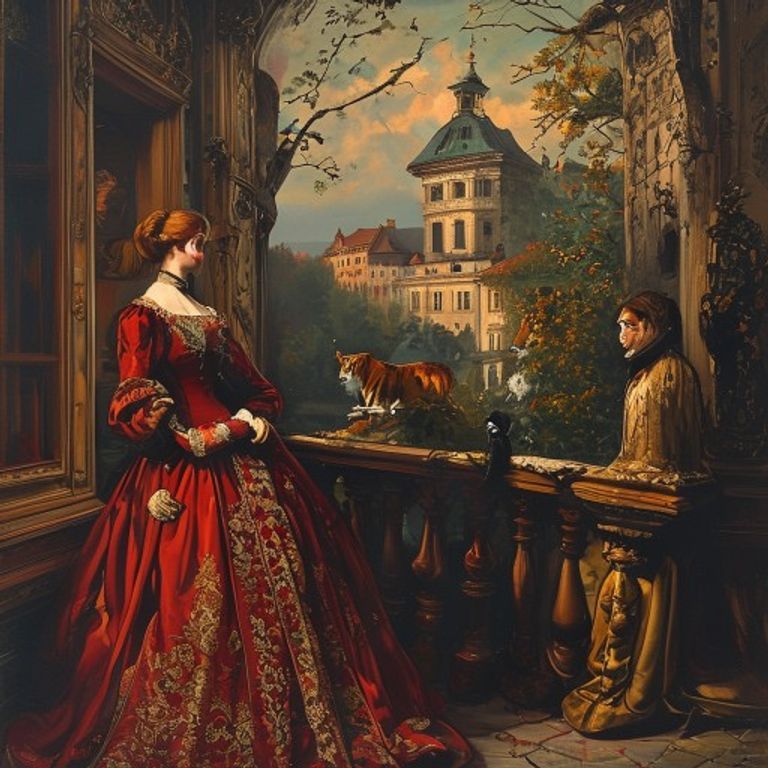
Vizualizace jsou generovány umělou inteligencí a slouží jako inspirace.
Tips from visitors
No tips yet. Be the first!
Log in and add your tip.
Location on the map



Příběhy a pověsti
Legendy, pověsti a příběhy spjaté s touto památkou
Reviews and comments