





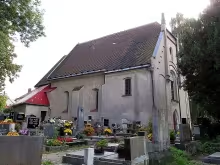
The Church of All Saints in Nové Město nad Metují is a Roman Catholic filial church with historical significance dating back to the late Renaissance period. Located within the town, this architectural gem was constructed between 1560 and 1562 due to insufficient capacity at an existing cemetery chapel. Its designation as a cultural monument in 1958 underscores its importance within the community.
The origins of the Church of All Saints are rooted in the mid-16th century when Bohemia experienced religious tensions between Catholics and Protestants, influencing architectural developments in the region. In response to these pressures, the utrakvists initiated the construction of a new cemetery and church on this site. Andrea Vlach, an architect of note during that era, designed the Gothic-Renaissance structure. The church's initial purpose was to serve as a place of burial and worship, reflecting the religious dynamics of its time.
Architecturally, the Church of All Saints is characterized by its simple yet elegant design. As a Gothic-Renaissance building, it features a single nave with narrow windows and a three-sided façade. The church underwent significant renovations in 1821, followed by extensive rebuilding between 1867 and 1870, which transformed its appearance while retaining its original stylistic elements. In 1570, a mortuary with a tower was added to the complex, enhancing its architectural significance.
Ownership of the Church of All Saints has seen several transitions over the centuries. Initially owned by the town, it came under the management of the Czechoslovak Church in the early 20th century. However, in 1933, after the completion of a nearby Husova sbor project, the church was returned to Roman Catholic use while remaining municipally owned. In 2000, the local Roman Catholic parish acquired the church for a symbolic price of one crown, marking another significant change in its stewardship.
Throughout its history, the Church of All Saints has been associated with notable events and figures. The cemetery adjacent to the church is the final resting place of Bedřich Smetana's parents, adding cultural significance to this site. Inside, visitors can find a simple altar adorned with a 19th-century painting depicting All Saints, alongside early 20th-century stone tombstones from the nearby cemetery. These elements contribute to the church’s historical and artistic value.
Today, the Church of All Saints remains an important cultural and religious landmark in Nové Město nad Metují. While services are held only on specific occasions such as All Saints' Day, All Souls’ Day, and during funerals, its historical significance continues to attract visitors interested in exploring its rich past. The church's designation as a cultural monument ensures its preservation for future generations.
Visiting the Church of All Saints offers an opportunity to delve into the religious and architectural history of Nové Město nad Metují. Its blend of Gothic and Renaissance styles, coupled with its storied past, makes it a worthwhile destination for those interested in historical monuments. The church stands as a testament to the cultural heritage of the region, inviting visitors to appreciate its enduring legacy.
Historical milestones
- 1560
- Začátek stavby kostela Všech svatých
- 1562
- Dokončení stavby kostela Všech svatých
- 1570
- Přidání hrobníku s věží k komplexu
- 1821
- Významné rekonstrukce kostela
- 1867
- Počátek rozsáhlého přestavbování
- 1870
- Dokončení rozsáhlého přestavbování
- 1958
- Zachování kostela jako kulturní památky
Architectural development
Originally built as a Gothic-Renaissance structure, the Church of All Saints has seen several phases of development. Notable changes include the construction of a mortuary with a tower in 1570 and major renovations in the late 19th century that transformed its appearance.
Historical events
In 1555, due to insufficient capacity at the existing cemetery chapel, a new cemetery and church were initiated by the utrakvists.
The church underwent significant renovations in 1821 and was extensively rebuilt between 1867-1870.
Owners
Originally owned by the town, the church was later managed by the Czechoslovak Church in the early 20th century before being returned to Roman Catholic use in 1933. In 2000, it was sold to the local Roman Catholic parish for a symbolic price of one crown.
Points of interest
- The Church of All Saints was constructed between 1560 and 1562 primarily due to the need for a larger space than what the existing cemetery chapel could provide, reflecting the growing community's burial needs during that period.
- Despite its Gothic-Renaissance architectural style, the church underwent significant renovations in 1821 and extensive rebuilding from 1867 to 1870, which transformed its appearance while maintaining original stylistic elements such as narrow windows and a three-sided façade.
Guide
Show guide text
Welcome to the Church of All Saints in Nové Město nad Metují, a remarkable testament to history and faith nestled within this charming town. As you stand before this majestic structure, take a moment to absorb its serene presence—a blend of architectural beauty and historical depth.
The story of this church begins in the late Renaissance period, between 1560 and 1562. It was constructed out of necessity when an existing cemetery chapel could no longer accommodate the growing community's burial needs. This decision marked the beginning of a new era for Nové Město nad Metují, reflecting both its expanding population and evolving spiritual practices.
As we delve into the architecture, notice how the church harmoniously blends Gothic-Renaissance elements, a style that speaks volumes about the period in which it was built. While specific architectural details might not be immediately visible from your vantage point, take this opportunity to appreciate the overall silhouette of the building and its place within the town's landscape.
The Church of All Saints has witnessed significant transformations over the centuries. In 1570, a notable addition was made with the construction of a cemetery chapel featuring a tower, enhancing both its functionality and aesthetic appeal. The church underwent major renovations in 1821 and again between 1867 and 1870, each time emerging with renewed strength and beauty.
Although specific architects like Andrea Vlach are credited for their contributions, many individuals who played roles in the church's history remain unnamed, adding an air of mystery to its past. These silent contributors have left an indelible mark on this sacred site, ensuring its legacy endures through time.
One intriguing aspect of the Church of All Saints is its evolution from a simple chapel extension to a full-fledged church. This transformation underscores not only architectural advancements but also shifts in community priorities and religious practices over the centuries.
As we conclude our brief journey here, I invite you to explore further, perhaps wandering around the church's perimeter or stepping inside to discover more about its interior charm. Each corner holds stories waiting to be uncovered, each stone a silent witness to history. Thank you for joining me in this exploration of the Church of All Saints—a place where past and present beautifully converge.
Businesses nearby
Do you run a restaurant, accommodation, shop, museum, rental, wellness or other visitor service near this monument? Show yourself directly to the people heading to it — this is how they will see you in the app and on the web:
Nearby
Located within Nové Město nad Metují, the church is surrounded by a historic cemetery. The area offers a glimpse into local history and culture.
Accommodation nearby
Themed route
Thematic Walking Tour: Nové Město nad Metují
1. Kostel Všech svatých (Church of All Saints) - Type: Church - Why Visit: Begin your journey at the heart of Nové Město nad Metují with a visit to the historic Kostel Všech svatých. This church is not only an architectural gem but also serves as a spiritual center for the community. Its serene ambiance and intricate design offer a glimpse into the region's rich religious history.
2. Historic Cemetery - Type: Cemetery - Why Visit: Adjacent to the Kostel Všech svatých lies the historic cemetery, which is an integral part of the church’s surroundings. Walking through this peaceful area provides insight into local customs and traditions surrounding life and death. The well-preserved tombstones and monuments tell stories of generations past, making it a poignant stop on your tour.
3. Church Nádvoří (Church Courtyard) - Type: Courtyard - Why Visit: Explore the church courtyard to appreciate its architectural beauty and tranquility. This space offers an excellent opportunity for reflection or photography, capturing the essence of Nové Město nad Metují’s historical landscape. The courtyard often hosts community events, providing a lively contrast to the serene church interior.
4. Church Tower - Type: Tower - Why Visit: Climb up to the Church Tower for breathtaking panoramic views of Nové Město nad Metují and its surroundings. This vantage point not only offers visual delight but also enhances your understanding of the town's layout and historical significance. The climb itself is a rewarding experience, offering both physical engagement and cultural insight.
5. Church Expozice (Exhibition) - Type: Exhibition - Why Visit: Conclude your tour by visiting any ongoing exhibitions within the church premises. These displays often feature local art, historical artifacts, or religious relics that provide deeper context to the town's heritage and cultural narrative. Engaging with these exhibits offers a comprehensive understanding of the community’s values and history.
This thematic walking tour encapsulates the essence of Nové Město nad Metují through its most significant landmarks, offering both educational enrichment and an immersive cultural experience.
```Seasonal recommendations
Jaro: In the spring season, St. Vitus Church in Nové Město nad Metují offers a stunning view of blooming gardens and trees that enliven the surrounding landscape. The sun illuminates the church's interior more warmly, contributing to a gentle and peaceful atmosphere, ideal for visiting during this rejuvenating time of year. Visitors can expect moderate crowd levels, especially towards the end of the week and midday. It is recommended to wear comfortable walking shoes for the green areas around the church and light clothing with an extra jacket or raincoat, as spring temperatures can be variable.
Summer: Summer is an ideal time to visit St. Vitus Church due to long daylight hours that allow for detailed exploration of both the interior and surrounding green spaces. Sunlight can highlight the architectural details of the church and contribute to clear, vibrant color contrasts inside. Despite low crowd levels early in the day, there are often crowds during the summer afternoons, so it is advisable to visit the church early in the morning. Wearing light clothing and sun protection cream is essential for a comfortable visit during the warm months.
Autumn: The autumn season at St. Vitus Church offers a unique experience with colorful foliage and a mild, pleasant atmosphere. Sunny days create beautiful lighting that highlights the architecture of the church and its interior. Visitors can expect moderate crowd levels, especially on Sundays and midday, but visiting early in the morning or later in the afternoon may be quieter. Comfortable clothing with an extra jacket is recommended, as autumn temperatures can change quickly and it can get cold at night.
Winter: A winter visit to St. Vitus Church offers a peaceful experience with mild crowd levels, especially during Advent days and the Christmas period. Fewer daylight hours may affect the church's lighting, but light shines through colorful stained glass windows, creating a magical atmosphere. It is important to visit the church early in the morning or later in the afternoon due to shorter opening hours and cold outdoor temperatures. Wearing warm clothing, including sweaters, coats, and protective boots, is essential for a comfortable visit during the winter months.
Visualizations and artistic views

Vizualizace jsou generovány umělou inteligencí a slouží jako inspirace.


Tips from visitors
No tips yet. Be the first!
Log in and add your tip.
Location on the map



Příběhy a pověsti
Legendy, pověsti a příběhy spjaté s touto památkou
Reviews and comments