





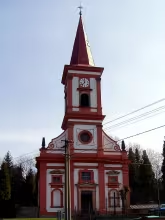
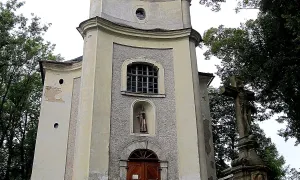
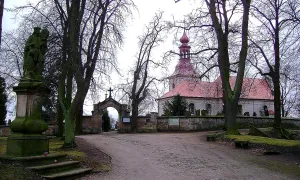
The Church of Saint Wenceslas in Machov is a Roman Catholic filial church located in the village of Machov within Královéhradecký kraj. This historical monument features late Renaissance architecture and has a rich history dating back to at least 1369, when it was first mentioned in written records. Originally built as a wooden structure around 1586, it underwent significant transformation by 1670 when the original building was replaced with a stone church, likely with contributions from Vavřinec Piccolomini.
The earliest documented mention of the Church dates back to 1369, suggesting its role as a parish church even before this date. By 1670, the wooden structure was demolished and replaced by a stone building, marking an architectural evolution for the church. This transition reflects broader cultural and architectural trends in Bohemia during the late 17th century when the region was part of the Habsburg Monarchy. The period saw increased religious architecture influenced by Baroque art, although the Church is noted for its late Renaissance style.
Architecturally, the church features a single-nave design with a closed presbytery and sacristy on the north side, all covered by a barrel vault with lunettes for windows. It stands prominently on an elevated site behind the village square, facing west. The interior and exterior plastering were completed by 1720, enhancing its aesthetic appeal. A separate stone bell tower was constructed in 1685 but demolished in 1885 when a foundational stone from the original wooden bell tower dated 1586 was discovered. This stone bears an inscription preserved above the church's organ.
The interior is adorned with neorenaissance altars created in 1899 by the sculpting firm Petr Bušek and sons from Sychrov. The main altar, dedicated to Saint Wenceslas, features an altarpiece painted in 1894 by Vilém Kandler. Flanking this central piece are altars of Saints Benedict and a depiction of the Sorrowful Mother of God, accompanied by statues of Saint Scholastica, Saint Francis, Saint John the Evangelist, and Saint Joseph. The church also houses a rococo baptismal font with an angelic sculpture on its upper surface. Additionally, the Stations of the Cross consist of paintings acquired from Vienna by the firm Zambach and Müler, displayed in niches along the walls. Sculptures of Saints Wenceslas, John Nepomucene, Saint Ludmila, and Our Lady of the Rosary are strategically placed on pedestals throughout the nave.
Throughout its history, the Church has been a focal point for religious activities within the community. Regular services continue every Sunday at 11:00 AM and on Wednesdays at 4:30 PM, maintaining its role as an active place of worship. Its historical significance is underscored by its designation as a cultural monument, ensuring preservation for future generations.
Today, the Church remains accessible to visitors who wish to explore its architectural beauty and historical depth. Its well-preserved structure offers insight into the late Renaissance style and the religious heritage of the region. For those interested in history, architecture, or spirituality, a visit provides an enriching experience that connects past traditions with present-day community life. The Church stands as a testament to the enduring legacy of faith and artistry in Machov, inviting all who appreciate cultural heritage to explore its storied walls.
Historical milestones
- 1369
- První písemná zmínka o kostele.
- 1586
- Původní dřevěný kostel postaven.
- 1670
- Dřevěná stavba nahrazena kamennou.
- 1675
- Vznik nového kostela svatého Václava.
- 1685
- Postaven samostatný kamenný věžník.
- 1720
- Vnitřní a vnější omítky dokončeny.
Architectural development
The Church of Saint Wenceslas underwent significant architectural changes over time. Initially constructed as a wooden building in the late 16th century, it was replaced by a stone edifice in 1670. The interior and exterior plastering were completed by 1720. A separate stone bell tower was added in 1685, with its demolition occurring in 1885 revealing historical inscriptions.
Historical events
1369: Earliest written mention of the church.
1670: The original wooden church was demolished and replaced with a stone structure.
Points of interest
- The Church of Saint Wenceslas in Machov features a unique architectural history with its stone bell tower being demolished in 1885 after the discovery of a foundational stone from the original wooden bell tower dated 1586. This stone, bearing an inscription, is now preserved above the church's organ.
- Despite the church's late Renaissance style, it houses neorenaissance altars created in 1899 by Petr Bušek and sons from Sychrov. These altars blend different architectural periods within the same sacred space, reflecting a layered historical narrative.
Guide
Show guide text
Welcome to the historic Church of Saint Wenceslas in Machov, a gem nestled within the scenic village of Královéhradecký kraj. As you stand here today, take a moment to absorb the serene atmosphere surrounding this Roman Catholic filial church. The structure before you is an embodiment of history and architectural grace, inviting you on a journey through time.
Let's begin with its origins. The first written mention of a church in Machov dates back to 1369, marking the beginning of its storied existence. However, it wasn't until around 1586 that the original wooden structure was erected, serving as a spiritual haven for the local community. By 1670, this humble wooden edifice gave way to a more enduring stone building, likely with contributions from Vavřinec Piccolomini, reflecting a transition not just in materials but also in aspirations.
The Church of Saint Wenceslas is celebrated for its late Renaissance architectural style. As you gaze upon the church, notice its single-nave design—a hallmark of this period—exuding elegance and simplicity. The stone bell tower, which once graced this site until 1885, has left an indelible mark on the church's history. In place of the original wooden bell tower dated 1586, a foundational stone was discovered, bearing an inscription that is now preserved above the church’s organ loft.
As we delve deeper into its architectural narrative, consider the addition in 1685 when a separate stone bell tower was constructed, enhancing both the skyline and spiritual presence of Machov. By 1720, the internal and external plasterwork was completed, adding layers to the church's aesthetic appeal.
The story of this place is interwoven with significant historical figures, most notably Vavřinec Piccolomini, whose contributions likely played a role in shaping its current form. His involvement underscores the church’s importance as not just a religious site but also a cultural landmark.
Now, let your curiosity be piqued by an intriguing aspect of this church—the foundational stone from the original wooden bell tower. This artifact carries with it tales of resilience and continuity, serving as a tangible link to Machov's past. It stands as a testament to the enduring spirit of those who built and cherished this sacred space.
As you continue your exploration, allow yourself to be enveloped by the church’s tranquil ambiance. Each stone tells a story, each corner holds a memory. We invite you to wander around, absorb the details, and perhaps sit for a moment in reflection.
Thank you for joining us on this journey through history at the Church of Saint Wenceslas in Machov. May your visit inspire further discovery and appreciation of the rich tapestry that is our shared heritage. Safe travels as you continue your exploration!
Businesses nearby
Do you run a restaurant, accommodation, shop, museum, rental, wellness or other visitor service near this monument? Show yourself directly to the people heading to it — this is how they will see you in the app and on the web:
Accommodation nearby
Themed route
Tematická výletní trasa: Kostel svatého Václava (Machov)
1. Kostel svatého Václava, Machov *Typ:* Náboženská památka *Proč stojí za návštěvu:* Tento barokní kostel je nejen centrem duchovního života v obci, ale také architektonickou perli s bohatým historickým pozadím. Jeho interiér nabízí krásné fresky a sochy, které přitahují návštěvníky z celého regionu.
2. Machovská fara *Typ:* Náboženský objekt *Proč stojí za návštěvu:* Nachází se v blízkosti kostela svatého Václava a je součástí komplexu, který představuje duchovní centrum obce. Fara má historickou hodnotu s bohatou sbírkou starých knih a dokumentů, které odrážejí místní historii.
3. Machovské nádvoří *Typ:* Městský prostor *Proč stojí za návštěvu:* Nádvoří před kostelem slouží jako místo pro místní akce a trhy. Je to ideální místo, kde si můžete užít klidné chvilky nebo se podívat na živý duch obce během různých událostí.
4. Machovské hřbitovy *Typ:* Historický areál *Proč stojí za návštěvu:* Hřbitovy jsou klíčovou součástí historie obce, s památníky a starodávnými kameny, které vyprávějí příběhy minulých generací. Jsou to místa úcty a reflexe, nabízející pohled do dějin obce.
Tato trasa vám umožní prozkoumat nejen kostel svatého Václava, ale také další historické a kulturní aspekty Machova.
Seasonal recommendations
Spring: Visiting the Church of St. Wenceslas in Machov during spring offers a unique experience as nature awakens, enveloping the historic site with vibrant colors and fresh scents. The soft light filtering through budding trees creates an ethereal atmosphere that enhances the church's architectural beauty. This season is ideal for photography enthusiasts who wish to capture the harmonious blend of natural and historical elements. Visitors should be prepared for occasional rain showers by wearing waterproof footwear and carrying a light jacket, as spring weather can be unpredictable. The moderate number of visitors allows for a peaceful exploration without long waits.
Summer: Summer in Machov is perfect for those looking to enjoy outdoor activities while exploring the Church of St. Wenceslas. The long daylight hours provide ample time to wander through the area and appreciate the church's surroundings, which are often filled with blooming flowers and lush greenery. This season attracts more visitors due to its pleasant weather, so it is advisable to arrive early in the morning or later in the afternoon to avoid crowds. Lightweight clothing and comfortable walking shoes will enhance your experience, allowing you to comfortably explore both the church and nearby attractions.
Autumn: Autumn presents a picturesque setting for visiting the Church of St. Wenceslas with its rich tapestry of warm colors as leaves turn golden and red. The cooler temperatures make it an ideal time for leisurely walks around the church grounds, enjoying the crisp air and serene atmosphere. This season is less crowded than summer, providing a more tranquil experience. Visitors should dress in layers to accommodate varying temperatures throughout the day and consider bringing a scarf or hat to shield from any brisk winds.
Winter: The Church of St. Wenceslas takes on a magical quality during winter when snow blankets the area, creating a serene and almost fairy-tale-like atmosphere around this historic site. While some areas may be less accessible due to weather conditions, those who venture out are rewarded with stunning views and a quiet setting. It is crucial to dress warmly in layers, wear waterproof boots, and perhaps bring gloves and a hat for comfort during your visit. The shorter daylight hours mean planning your trip earlier in the day to fully appreciate the church's winter charm before closing time.
Visualizations and artistic views

Vizualizace jsou generovány umělou inteligencí a slouží jako inspirace.


Tips from visitors
No tips yet. Be the first!
Log in and add your tip.


Reviews and comments