





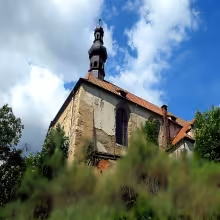
The Church of Saint Nicholas in Východní Předměstí, Plzeň, stands as a testament to architectural evolution and historical significance over the centuries. Founded in 1406 on the site of Mitrvald castle, owned by the Lords of Litice, this baroque church has undergone numerous transformations reflecting its enduring importance. Its two-nave structure with a polygonal presbytery and an adjoining Chapel of Saint Anne highlights architectural complexity. Notably, since 1993, it has served as a place of worship for the Greek Catholic Church.
The origins of the Church of Saint Nicholas are deeply rooted in the early 15th century when Bohemia was part of the Holy Roman Empire under King Wenceslaus IV. This period was marked by political instability and conflicts, including the Hussite Wars that began shortly after the church's founding. The initial construction in 1406 laid the foundation for what would become a significant religious site.
Architecturally, the church has experienced several phases of transformation. In 1599, it underwent major changes with the rebuilding of its presbytery and Chapel of Saint Anne, marking a shift towards more elaborate styles. The Baroque era brought further modifications between 1739 and 1744, during which a new portal and side nave were added. These changes enhanced the church's aesthetic appeal and reflected broader trends in European architecture. In the 19th century, additional updates included constructing a sacristy to ensure functionality.
Throughout its history, the Church of Saint Nicholas has seen various owners and administrators, each contributing to its development. The transition to Greek Catholic use in 1993 signifies its adaptability and continued relevance in contemporary religious practice. This change underscores the church's ability to serve diverse communities over the centuries.
Key events include architectural modifications in 1599 and during the Baroque period from 1739 to 1744. These changes were pivotal in shaping its current form, blending elements of Baroque and Rococo styles within its interior. The presence of altars, sculptures, and pulpits further exemplifies this stylistic evolution.
Today, the Church of Saint Nicholas remains a significant cultural and religious landmark. Its rich history and architectural beauty make it a worthwhile visit for those interested in exploring Plzeň's past. Visitors can appreciate its intricate design and historical context, gaining insight into the region's evolving artistic and spiritual landscape. The church continues to welcome worshippers and tourists alike, offering a unique glimpse into centuries of Bohemian heritage.
Historical milestones
- 1406
- Založení kostela svatého Mikuláše na místě hradu Mitrvald.
- 1599
- Významné přestavby presbytáře a kaple Panny Marie Sněžné.
- 1739
- Začátek barokních úprav, včetně nového portálu a bočního presbytáře.
- 1744
- Dokončení barokních přestavbách kostela svatého Mikuláše.
- 1993
- Přeměna na místo bohoslužeb pro Řeckokatolickou církev.
Architectural development
The Church of Saint Nicholas has experienced several architectural phases. Initially built in 1406, it saw significant changes in 1599 with the reconstruction of its presbytery and Chapel of Saint Anne. The Baroque period brought further modifications between 1739 and 1744, including a new portal and side nave. In the 19th century, additional updates were made, culminating in the construction of a sacristy.
Historical events
In 1599, the church underwent significant changes when the presbytery and Chapel of Saint Anne were rebuilt.
Between 1739 and 1744, during the Baroque period, a new portal and side nave were added.
Points of interest
- The Church of Saint Nicholas was originally built on the site of Mitrvald castle, which belonged to the Lords of Litice in 1406. This connection to a medieval stronghold adds an intriguing layer to its historical narrative.
- Despite being founded during King Wenceslaus IV's reign, the church witnessed the tumultuous Hussite Wars shortly after its establishment. Its survival through this period highlights its resilience and significance amidst religious upheaval.
Guide
Show guide text
Welcome to the historic Church of Saint Nicholas in Východní Předměstí, Plzeň. As you stand here today, imagine yourself stepping back into a rich tapestry woven through centuries of history and transformation. This remarkable church, with its two-nave structure and polygonal presbytery, invites you to explore the layers of stories it holds.
The origins of this sacred site trace back to 1406 when it was founded on the grounds of the Mitrvald castle, once owned by the Lords of Litice. Picture a medieval stronghold that served as the backdrop for this spiritual edifice's birth during the reign of King Wenceslaus IV. The church has since undergone significant transformations, each era leaving its mark.
As you look around, take in the architectural evolution of the building. Notice how it seamlessly blends various styles over time. The polygonal presbytery and the adjoining chapel dedicated to Saint Anne are particularly noteworthy features that speak volumes about the church's historical journey. In 1599, the presbytery and the Chapel of Our Lady of the Snow underwent significant renovations, adding layers of history to its structure.
The year 1739 marked the beginning of baroque transformations, introducing a new portal and a side presbytery. By 1744, these changes were completed, leaving an indelible mark on the church's architectural identity. This period added grandeur and elegance to the already historic site.
Throughout its history, the Church of Saint Nicholas has been home to many stories and figures, though some remain unnamed. Yet, it is precisely this mystery that adds to its allure. Imagine the countless individuals who have walked these grounds over the centuries, each contributing to its legacy in their own way.
One intriguing aspect of this church's past is its transformation in 1993 into a place for the Greek Catholic Church's services. This adaptation highlights the enduring nature and flexibility of this historic site, allowing it to continue serving as a spiritual haven through changing times.
As you reflect on what you've seen and learned, I invite you to explore further and immerse yourself in the stories that echo within these walls. Thank you for joining me on this journey through history at the Church of Saint Nicholas. May your exploration here inspire curiosity and wonder about the past's enduring presence in our lives today.
Tips for visitors
The best time to visit the Church of Saint Nicholas is during late spring or early autumn when the weather is pleasant, allowing you to comfortably explore both the church and its surroundings. These seasons offer mild temperatures and beautiful natural light that enhance the historical architecture's details. Additionally, visiting outside peak tourist season can provide a more serene experience with fewer crowds.
Parking near Východní Předměstí can be limited, so it is advisable to use public transportation if possible. The area is accessible by bus and tram lines, which connect well with other parts of Plzeň. If driving, look for nearby parking options as early as possible, especially during weekends or holidays when demand may increase.
When visiting the Church of Saint Nicholas, consider bringing comfortable walking shoes, a hat, sunscreen, and a water bottle to stay hydrated throughout your visit. Since there are no specific dress codes mentioned for entering the church, casual attire is generally acceptable. It's also wise to carry a small backpack or bag to hold any personal items you might need during your exploration.
For photography enthusiasts, the best spots to capture the Church of Saint Nicholas include its west and south facades which are beautifully illuminated by the morning sun. The golden hour just after sunrise or before sunset provides soft lighting that accentuates the church's architectural details. Additionally, exploring the interior can offer unique perspectives with natural light filtering through stained glass windows.
Nearby attractions within a 30-minute radius include historical sites and cultural landmarks such as Mitrvald Castle, which is located on the site where the Church of Saint Nicholas was originally founded. This castle offers insights into the region's medieval history and provides picturesque views of the surrounding landscape. Exploring these nearby locations can enrich your visit by providing context to the church’s historical significance.
For families with children, visiting the Church of Saint Nicholas can be a fun educational experience. The church grounds and nearby Mitrvald Castle offer plenty of space for kids to explore. Consider bringing along some snacks or a picnic lunch to enjoy in the open areas around the site. Engaging children with stories about the history of the church and castle can make the visit more interactive and memorable.
Businesses nearby
Do you run a restaurant, accommodation, shop, museum, rental, wellness or other visitor service near this monument? Show yourself directly to the people heading to it — this is how they will see you in the app and on the web:
Accommodation nearby
Trips and activities nearby
Guided tours, tickets and activities nearby from GetYourGuide
Search tours and activities →Themed route
Tematická výletní trasa: Kostel svatého Mikuláše a jeho okolí
1. Kostel svatého Mikuláše (Východní Předměstí) - Hlavní cíl *Typ:* Náboženská památka *Proč stojí za návštěvu:* Tento barokní kostel je architektonickou perli Východního Předměstí. Jeho bohaté historie a umělecké prvky, včetně fresk a sochařských děl, činí z něj nezbytným místem pro každého navštěvujícího Plzeň. Kromě toho nabízí kostel výhled na okolní krajinu a je centrem mnoha místních tradic.
2. Místní tržiště (nádvoří u kostela) *Typ:* Historické nádvoří *Proč stojí za návštěvu:* Toto místo je historicky spojeno s kostelem a sloužilo jako centrum místního obchodu. Návštěvníci zde mohou pocítit atmosféru starých časů, kdy se lidé setkávali pro obchodování a společenské akce. Je to ideální místo pro relaxaci a prohlídku po návštěvě kostela.
3. Park u kostela svatého Mikuláše *Typ:* Místní park *Proč stojí za návštěvu:* Park nabízí klidné chodníky a zelené prostory, které jsou ideální pro relaxaci po prozkoumání kostela. Je to také místo pro rodinné výlety nebo pikniky, kde můžete užít si přírodní krásu okolního kraje a klidné prostředí.
4. Místní muzeum (v kostelním areálu) *Typ:* Malé muzeum *Proč stojí za návštěvu:* Toto malé muzeum je součástí kostelního komplexu a poskytuje vhled do historie kostela i místní oblasti. Exponáty zde odrážejí kulturní dědictví regionu, což činí návštěvu zajímavou pro ty, kteří se zajímají o historii a tradice Východního Předměstí.
Tato trasa nabízí komplexní pohled na kulturní a historické aspekty Východního Předměstí, s důrazem na kostel svatého Mikuláše jako centrálním bodu.
Seasonal recommendations
Spring: The Church of Saint Nicholas in Východní Předměstí is particularly enchanting during spring when the surrounding nature bursts into life with vibrant colors. As flowers bloom and trees regain their lush greenery, the church's historic architecture contrasts beautifully against the fresh backdrop. This season offers a serene atmosphere ideal for leisurely exploration. Visitors are advised to dress in layers as temperatures can be mild but unpredictable. Arriving early is recommended to enjoy the tranquility before larger crowds gather, especially on weekends when locals and tourists alike come to appreciate the revitalized landscape.
Summer: Summer at the Church of Saint Nicholas brings long days filled with warm sunlight that highlights the church’s intricate details. The season's extended daylight hours allow for more time to explore both inside and outside the historic site. Visitors should anticipate larger crowds, particularly during peak travel times in July and August, so arriving early is beneficial to avoid the busiest periods. Comfortable footwear and light clothing are recommended due to the warmer temperatures, along with staying hydrated throughout your visit.
Autumn: Autumn offers a picturesque setting at the Church of Saint Nicholas, as the leaves turn into shades of gold, orange, and red, creating a stunning contrast with the church's stone facade. The cooler weather makes for comfortable exploration without the summer heat, and the atmosphere is often quieter as the tourist season winds down. Visitors should dress warmly in layers to accommodate fluctuating temperatures and consider bringing an umbrella or raincoat, as autumn can bring unpredictable showers. Early mornings are ideal for photography with softer lighting.
Winter: The Church of Saint Nicholas takes on a mystical charm during winter when snow blankets the area, transforming it into a serene winter wonderland. The church's architecture is particularly striking against the white landscape, and the atmosphere is often quieter as fewer visitors venture out in colder weather. Practical advice includes dressing warmly with layers to combat the chill and ensuring comfortable footwear for potentially icy paths. Visitors should also be aware of shorter opening hours during this season, so planning your visit ahead is advisable.
Visualizations and artistic views

Vizualizace jsou generovány umělou inteligencí a slouží jako inspirace.


Tips from visitors
No tips yet. Be the first!
Log in and add your tip.


Reviews and comments