





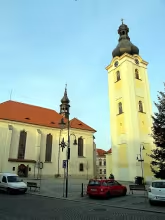
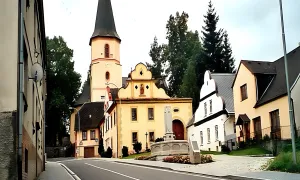
The Church of St. Nicholas with Bell Tower in Dobřany is a cultural monument that originated as a Gothic structure. It was later transformed into Baroque style under architect Martin Glaser between 1756 and 1758. Located in the village of Dobřany, within the Plzeňský kraj region, this church stands out for its rich history marked by numerous reconstructions due to events such as plundering by Hussites in 1420, destruction by fire in 1620, and damage during Swedish military actions in 1645. The architectural evolution of the Church reflects a blend of preserved Gothic elements like walls and arches alongside Baroque features including the main altar designed by Karel Legát in 1762.
The church's history dates back to its first documented mention in 1259 when Vykart z Tyrné and his wife Bílá donated it to the sisters of St. Mary Magdalene, marking its significance as a religious site from early on. Over the centuries, the church experienced various phases of ownership and administration, initially managed by chotěšovský klášter until 1804 when it was taken over by the Teplé monastery. These transitions reflect broader historical shifts in Bohemia during the late medieval period, a time characterized by religious upheaval leading up to the Hussite Wars.
Architecturally, the Church began as a Gothic structure without a tower and has undergone significant alterations over time. The Baroque renovations between 1756 and 1758 introduced new elements under Martin Glaser's direction, including a Rococo main altar from 1762 featuring sculptures of St. Wenceslas and St. Florian. Despite these changes, the church retains several Gothic features such as its walls, arches, and profiled cornices on the chancel. The interior is adorned with frescoes and paintings by F. J. Luxe, including an image depicting the apotheosis of St. Nicholas.
Throughout its history, the Church has witnessed several key events that have shaped its current form. In 1420, it was plundered by Hussites, reflecting the religious conflicts of the time. The church suffered destruction by fire in 1620 and later damage from Swedish forces in 1645. These incidents necessitated multiple reconstructions, with significant repairs occurring in 1651, 1692, and notably during its Baroque transformation in the mid-18th century.
Today, the Church of St. Nicholas stands as a testament to its resilience through centuries of change. It remains accessible to visitors who are drawn to its historical significance and architectural beauty. The church's cultural importance is further highlighted by its status as a protected monument since 1963, alongside the adjacent bell tower that has also undergone restoration. Visitors can appreciate not only the blend of Gothic and Baroque styles but also the rich history encapsulated within its walls.
The Church of St. Nicholas in Dobřany offers a unique glimpse into the past, inviting visitors to explore its storied architecture and historical significance. Its journey through time, marked by both destruction and renewal, makes it a compelling destination for those interested in cultural heritage and architectural evolution.
Historical milestones
- 1259
- The church was donated to the sisters of St. Mary Magdalene.
- 1420
- The church was plundered by Hussites.
- 1620
- The church was destroyed by fire.
- 1645
- The church was damaged by Swedish forces.
Architectural development
Originally a Gothic structure, the church has been significantly altered over time. It underwent Baroque renovations between 1756 and 1758 under Martin Glaser's direction. The church features a mix of preserved Gothic elements such as walls and arches, alongside baroque additions like the main altar by Karel Legát.
Historical events
In 1259, Vykart z Tyrné and his wife Bílá donated the church to the sisters of St. Mary Magdalene.
The church was plundered by Hussites in 1420.
It was destroyed by fire in 1620 and later damaged by Swedish forces in 1645.
Points of interest
- The Church of St. Nicholas was originally donated to the sisters of St. Mary Magdalene in 1259 by Vykart z Tyrné and his wife Bílá, highlighting its early religious significance as a site dedicated to female monastic life.
- In 1804, the church transitioned from being managed by the chotěšovský klášter to the Teplé monastery, reflecting broader ecclesiastical realignments in Bohemia during that period.
Guide
Show guide text
Welcome to the historic Church of St. Nicholas in Dobřany, a remarkable testament to architectural evolution and cultural heritage. As you stand before this majestic structure, take a moment to absorb its grandeur. The church's façade, with its intricate Baroque detailing, invites you into centuries of history.
The origins of this church trace back to the Gothic period, but it was transformed between 1756 and 1758 under the skilled guidance of architect Martin Glaser, who imbued it with a stunning Baroque style. This transformation is evident in the elegant lines and ornate decorations that grace its exterior today.
Let's delve into its storied past. In 1259, Vykart z Tyrné and his wife Bílá generously donated this church to the sisters of St. Mary Magdalene, marking it as a significant site for female monastic life. However, its journey through history has been tumultuous. In 1420, the Hussites plundered the church, leaving scars on its legacy. The challenges continued with a devastating fire in 1620 and further damage from Swedish forces in 1645.
As you explore, notice how these historical events have shaped the church's architecture. Each reconstruction layer tells a story of resilience and adaptation. Though specific visual details like spires or sculptures are not documented here, feel free to appreciate the overall atmosphere and craftsmanship that define this cultural monument.
Several key figures are intertwined with its history. Vykart z Tyrné and Bílá played pivotal roles in its early religious significance. Later, individuals like Jan Simbalienský and Bohumil Schmida contributed to its enduring legacy.
A fascinating aspect of this church is its transition in 1804 from being managed by the chotěšovský k, reflecting broader changes in ecclesiastical administration over time.
As you continue your visit, I invite you to explore every corner and imagine the lives that have passed through these walls. Each stone and archway holds a piece of history waiting to be discovered. Thank you for joining me on this journey through time at the Church of St. Nicholas. May your exploration inspire curiosity and wonder.
Businesses nearby
Do you run a restaurant, accommodation, shop, museum, rental, wellness or other visitor service near this monument? Show yourself directly to the people heading to it — this is how they will see you in the app and on the web:
Accommodation nearby
Trips and activities nearby
Guided tours, tickets and activities nearby from GetYourGuide
Search tours and activities →Themed route
Tematická výletní trasa: Kostel svatého Mikuláše se zvonicí
1. Kostel svatého Mikuláše se zvonicí (Kostel) Začněte svůj výlet u samotného kostela, který je nejen duchovním centrem obce Dobřany, ale také architektonickou perli. Tento barokní kostel s jeho charakteristickou zvonnicí nabízí krásný pohled na okolní krajinu a je ideálním místem pro pochopení historie a kultury této oblasti.
2. Obecní úřad Dobřany (Veřejné budovy) Přibližně 5 minut chůze od kostela se nachází obecní úřad, který slouží jako administrativní centrum místního samosprávného celku. Navštívte ho pro poznání historie a současné činnosti městských služeb v Dobřanech.
3. Městský park (Park) Krátce od obecního úřadu se nachází malebný městský park, který nabízí klidné prostory pro relaxaci a krátké procházky. Je to ideální místo k odpočinku po návštěvě kostela a úřadu, s příležitostmi prozkoumat místní flóru a faunu.
4. Školní zařízení (Vzdělávací instituce) Následující cílem je škola v Dobřanech, která představuje důležitý aspekt místní komunity a jejího rozvoje. Navštívte ji pro poznání historie vzdělávání ve vesnici a možnost pozorovat moderní pedagogické metody.
5. Dobřanská zastávka (Veřejné dopravní zařízení) Konečným bodem trasy je místní autobusová zastávka, která slouží jako důležité spojení pro obyvatele a návštěvníky. Zde si můžete připomenout historii veřejné dopravy v regionu a její roli v každodenním životě Dobřan.
Tato trasa nabízí komplexní pohled na kulturní, administrativní a společenské aspekty obce Dobřany.
Seasonal recommendations
Spring: The arrival of spring breathes new life into the Church of Saint Nicholas and its bell tower, with vibrant blossoms adorning surrounding gardens and pathways. This season offers a gentle atmosphere as nature awakens, making it an ideal time for photography enthusiasts to capture the interplay between historic architecture and fresh greenery. Visitors should consider wearing comfortable layers due to fluctuating temperatures typical of spring mornings and afternoons. Early visits are recommended to avoid larger crowds that gather later in the day when the weather is more inviting.
Summer: Summer at the Church of Saint Nicholas brings long, warm days perfect for leisurely exploration. The lush greenery surrounding the church enhances its picturesque charm, making it a popular spot for both locals and tourists alike. During this season, visitors should expect larger crowds, especially during peak tourist months, so arriving early in the morning can provide a more serene experience. Wearing light, breathable clothing is advisable to stay comfortable under the sun, and carrying water is essential for hydration.
Autumn: Autumn transforms the Church of Saint Nicholas into a stunning canvas of warm hues as leaves change color, creating an enchanting atmosphere ideal for photography and contemplation. The cooler temperatures make it a pleasant time for extended visits without the summer heat. Visitors should dress in layers to accommodate the varying weather conditions typical of autumn days. This season is less crowded than summer, allowing for a more relaxed exploration of the church's historical features.
Winter: Winter at the Church of Saint Nicholas offers a serene and magical experience as snow blankets the surrounding landscape, enhancing its historic beauty with a touch of frosty charm. The shorter daylight hours mean visitors should plan to arrive early to make the most of their visit, while also dressing warmly in layers to combat the cold. Indoor areas provide cozy respite from chilly outdoor temperatures, making it an ideal time for those seeking peace and quiet away from summer crowds.
Visualizations and artistic views

Vizualizace jsou generovány umělou inteligencí a slouží jako inspirace.


Tips from visitors
No tips yet. Be the first!
Log in and add your tip.



Reviews and comments