





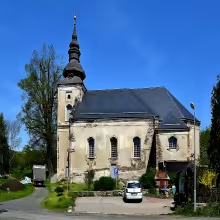
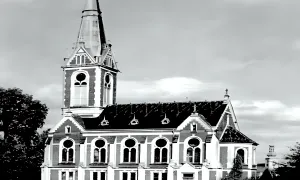
The Church of Saint Michael the Archangel in Blatno is a Roman Catholic church located in the village of Blatno, within the Chomutov District, Ústecký kraj. Constructed between 1782 and 1784 under Jan Václav Kosche's guidance, this architectural gem was consecrated just two years after construction began. Recognized as a cultural monument since 1963, it reflects the Classicism style prevalent in late 18th-century Bohemia.
The church's origins date back to when Bohemia was part of the Habsburg Monarchy, an era marked by Enlightenment-influenced cultural and architectural advancements. Construction began in 1782 under Kosche, a notable architect from Kadaň. By 1784, it had been consecrated, showcasing rapid development during this culturally rich period. This timeframe aligns with the rise of Classicism in architecture, characterized by symmetry and simplicity evident in the church's design.
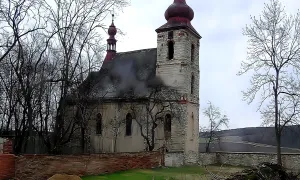
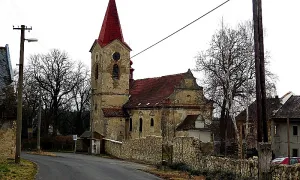
Architecturally, the Church features a rectangular nave with a flat ceiling transitioning into a semicircular presbytery inside, while externally it appears three-sided. A square sacristy is located on the south side, with an oratory above it. The western façade includes a spire tower. In 1892, significant reconstruction defined its current form, maintaining Classicist elements while adapting to new architectural needs.
Throughout its history, the church has undergone various changes and restorations. Notably, in 2022, an original organ built in 1782 by Johann Georg Ignaz Schmidt from Loket was rediscovered in Dresden after being considered lost for decades. This organ is a testament to the craftsmanship of the period and adds historical value to the church's collection. The main altar, dating back to 1775, features a newer painting of Saint Michael, enriching the church’s artistic heritage.
Today, the Church stands as a protected cultural monument in Blatno. Reconstruction efforts began in 2013, with an anticipated cost of 15 million Czech koruna. This ongoing restoration aims to preserve its historical and architectural integrity for future generations. The rediscovery and subsequent purchase of Schmidt's organ highlight the community’s dedication to maintaining the church’s cultural legacy.
Visiting the Church offers a glimpse into the rich history and architectural beauty of 18th-century Bohemia. Its status as a protected monument underscores its importance, making it a worthwhile destination for those interested in exploring historical sites that reflect cultural and artistic developments of their time. The church's blend of historical significance and ongoing restoration efforts invites visitors to appreciate its enduring legacy.
Historical milestones
- 1782
- The construction of St. Michael the Archangel's church began.
- 1784
- The church was consecrated after two years of construction work.
- 1892
- A significant reconstruction of the church, which defines its current appearance.
- 1963
- The church was recognized as a cultural monument.
- 2022
- The original organ from 1782 by Jan Václav Ignaz Schmidt was rediscovered in Dresden.
Architectural development
The church was originally built in 1782-1784 with a rectangular nave and flat ceiling, ending in a semicircular presbytery. The exterior presbytery is three-sided, and there's a square sacristy on the south side with an oratory above it. A spire tower adjoins the western façade. In 1892, the church underwent significant reconstruction that defined its present form.
Historical events
1784: Church consecration
1892: Major reconstruction of the church
Points of interest
- The rediscovery of Johann Georg Ignaz Schmidt's organ in 2022 is a remarkable story, as it was considered lost for decades before being found in Dresden. This highlights the church’s connection to historical craftsmanship and adds an element of mystery to its history.
- Despite being constructed rapidly between 1782 and 1784, the Church of Saint Michael the Archangel underwent significant reconstruction in 1892, which defined its current form while maintaining its Classicist elements. This reflects a blend of preservation and adaptation over time.
Guide
Show guide text
Welcome to the Church of Saint Michael the Archangel in Blatno, a remarkable Roman Catholic church nestled within the Chomutov District of Ústecký kraj. As you stand here today, take a moment to absorb the serene atmosphere that surrounds this historic site. The church's façade invites you into its storied past, offering a glimpse into both architectural beauty and rich history.
The journey of this sacred place began in 1782 when construction commenced under the expert guidance of architect Jan Václav Kosche. Within just two years, by 1784, the church was consecrated, ready to serve as a beacon of faith for its community. Its initial design captured the essence of late Baroque architecture, reflecting both religious devotion and artistic expression.
As you gaze upon the structure now, imagine the skilled hands that shaped it over centuries. The church underwent significant transformation in 1892, which brought about changes defining its current appearance—a testament to evolving architectural styles and community needs. This reconstruction not only preserved but enhanced its spiritual and aesthetic significance.
One of the most captivating stories tied to this church is the rediscovery of Johann Georg Ignaz Schmidt's organ in 2022. Once thought lost for decades, it was miraculously found in Dresden. This remarkable find connects us to a time when craftsmanship played a pivotal role in religious life, adding an intriguing layer to the church’s history.
As you continue exploring, take note of the intricate details that have stood the test of time. The church's architecture invites you to appreciate its resilience and beauty, elements that have been carefully preserved for future generations.
Before we conclude our visit, reflect on how this place has served as a spiritual home since its inception. It was officially recognized as a cultural monument in 1963, highlighting its importance not just locally but also nationally.
We invite you to linger a little longer, perhaps to explore the surrounding area or delve deeper into the church's history through available resources. Thank you for joining us on this journey through time and faith at the Church of Saint Michael the Archangel. May your visit be both enlightening and inspiring.
Businesses nearby
Do you run a restaurant, accommodation, shop, museum, rental, wellness or other visitor service near this monument? Show yourself directly to the people heading to it — this is how they will see you in the app and on the web:
Accommodation nearby
Themed route
Thematic Vlog Tour: Blatno and the Church of Saint Michael Archangel
1. Church of Saint Michael Archangel (Blatno) *Type:* Historical Landmark *Why Visit:* This stunning church, dating back to the 14th century, stands as a testament to Gothic architecture in the region. Its rich history and beautiful frescoes make it an essential visit for anyone interested in cultural heritage.
2. Local Museum (Blatno) *Type:* Cultural Site *Why Visit:* Located near the church, this museum offers insights into the local history and traditions of Blatno. It's a great place to learn about the community’s past and its evolution over centuries.
3. Historic Town Square (Blatno) *Type:* Urban Landmark *Why Visit:* The square is surrounded by charming old buildings that reflect the town's historical significance. Walking through this area provides a glimpse into Blatno's vibrant past, with architecture that tells stories of its development.
4. Old Town Hall (Blatno) *Type:* Architectural Site *Why Visit:* Adjacent to the church and museum, the Old Town Hall is an architectural marvel showcasing Renaissance influences. Its well-preserved structure offers a fascinating look at civic history and local governance through the ages.
5. Church Nádvoří (Courtyard of the Church) *Type:* Outdoor Space *Why Visit:* The courtyard provides a serene space to reflect on your visit, surrounded by the church’s impressive architecture. It's an ideal spot for capturing memorable photos or simply enjoying the tranquility of Blatno.
This tour offers a comprehensive exploration of Blatno's historical and cultural treasures, providing a deep dive into its rich heritage.
Seasonal recommendations
Jaro: Návštěva Kostela svatého Michaela archanděla v jarním období nabízí nádherný pohled na kvetoucí zelené okolí, které je živě oživeno různorodými květinami. Slunečné dny a mírné teploty vytvářejí ideální podmínky pro procházku kolem kostela a užívání jeho přírodního prostředí. Během tohoto období je doporučeno navštívit památku ve středu týdne, kdy je méně návštěvníků, a vyzvednout si teplé oblečení na případné chladné ráno nebo večer. Jaro také nabízí krásnou atmosféru pro fotografování s jasným slunečním osvětlením, které zdůrazňuje architektonické detaily kostela.
Léto: Léto přináší dlouhé dny a teplé večeře, což činí návštěvu Kostela svatého Michaela archanděla v Blatnu velmi atraktivní. Slunečné osvětlení zdůrazňuje stavební detaily a přidává kostelu romantický lesk, zatímco okolní zelené louky jsou plny života. V hlavní letní sezóně je doporučeno navštívit památku brzy ráno nebo pozdě večer, aby se vyhnuli velkým davům a užili si klidnější prostředí. Teplé oblečení v kombinaci s ochrannou slunečními kapsami je důležité pro pohodlí během návštěvy.
Podzim: Podzim nabízí jedinečný způsob, jak si užít Kostela svatého Michaela archanděla, s jeho zlatou a rudou paletou listnatých stromů. Atmosféra je klidná a tichá, což vytváří ideální podmínky pro relaxaci a reflektování. Slunečné dny jsou obvykle teplejší než večery, takže návštěvníci by měli přinést jak teplé oblečení, tak krátké rukavice pro užívání venku v klidných podzimních dnech. Navštívit památku na konci týdne může být zvlášť přínosné kvůli nižšímu počtu návštěvníků.
Zima: Zimní návštěva Kostela svatého Michaela archanděla nabízí jedinečnou atmosféru, kdy je kostel obklopen sněhem a mrazivými barevnými kontrasty. Slunečné dny jsou krátké, takže návštěvníci by měli plánovat svou návštěvu v maximálním slunečním osvětlení, obvykle ve středu nebo odpoledne. Teplé oblečení je nezbytné pro pohodlí během návštěvy, a navíc by měli být připraveni na kratší otevírací dobu památky. Navzdory chladu nabízí zimní období klidnou atmosféru pro užívání kostela bez velkých davů, což umožňuje intimnější zážitek.
Visualizations and artistic views

Vizualizace jsou generovány umělou inteligencí a slouží jako inspirace.


Atmosphere of the place
Atmospheric visualization of the setting and era
Tips from visitors
No tips yet. Be the first!
Log in and add your tip.

Reviews and comments