





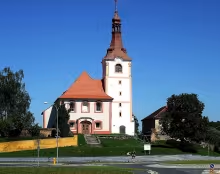
The Church of Saint Martin in Blížejov stands as a testament to architectural evolution from Gothic origins through Renaissance modifications. It reflects both historical significance and artistic heritage. Located in the village of Blížejov within the Plzeňský kraj region, this Roman Catholic filial church is dedicated to Saint Martin. Its construction began in the late 13th century during a period when Bohemia was part of the Holy Roman Empire under King Wenceslaus II—a time marked by significant Gothic architectural development across Europe.
The core structure of the Church of Saint Martin is rooted in Gothic architecture, characterized by pointed arches and ribbed vaults. Over the centuries, it has undergone several modifications that have added layers to its historical narrative. Around 1556, a notable transformation occurred under Kašpar Gottfried ze Žebnice, known as Bernášek. His influence is evident in the church's Renaissance portal adorned with heraldic decorations reminiscent of those found at Horšovský Týn Castle from the same year. This period also saw the addition of a side tower and an early Baroque gable, blending Gothic elements with newer stylistic features.
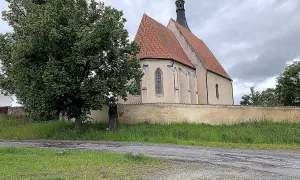
Architecturally, the Church of Saint Martin is distinguished by its longitudinal single-nave design, featuring a polygonal choir to which a sacristy is attached on the north side. The structure includes a non-ribbed bell tower at the southwest corner, characterized by arrow slits and topped with massive semi-columns supporting composite capitals that bear a main semicircular cornice. The roofs are gabled and shingled, while the facades of both the nave and choir are smoothly plastered, segmented only by profiled main cornices. Notably, the church retains a Gothic window in the choir's axis with remnants of its tracery.
Further architectural modifications took place in the first half of the 17th century, continuing into the late 18th century. These reflect ongoing adaptations and restorations that have preserved its historical essence while accommodating evolving aesthetic preferences. The western facade features newly arranged edicules along its axis, with a rectangular entrance set within a wavy cornice flanked by square windows at the height of the bell tower.
Today, the Church of Saint Martin in Blížejov remains an accessible and cherished site for visitors interested in exploring its rich historical layers. Its architectural blend of Gothic, Renaissance, and Baroque elements offers a unique glimpse into the past, making it a worthwhile destination for those keen on understanding the cultural and artistic heritage of the region. The church's enduring presence serves as a reminder of the dynamic history that has shaped this area, inviting visitors to appreciate its historical significance and architectural beauty.
Historical milestones
- 1556
- The church was modified by Kašpar Gottfried ze Žebnice.
Architectural development
The Church of Saint Martin underwent several phases of development. Initially built with a Gothic core, it was modified around 1556 by Kašpar Gottfried ze Žebnice. Further changes occurred in the first half of the 17th century and later in the late 18th century. The church features a side tower, a polygonal choir, and a sacristy attached to its north.
Historical events
- 1556
- The church was modified by Kašpar Gottfried ze Žebnice, known as Bernášek.
- 17th century
- Further architectural modifications took place in the first half of the 17th century.
Points of interest
- The Church of Saint Martin has a unique architectural feature: its polygonal choir with an attached sacristy on the north side, which is not commonly found in other Gothic churches from the same period.
- A curious blend of styles can be observed in the church's non-ribbed bell tower. It features arrow slits and massive semi-columns supporting composite capitals, merging defensive elements with Renaissance aesthetics uncommon for religious buildings.
Guide
Show guide text
Welcome to the Church of Saint Martin in Blížejov, a remarkable testament to architectural history and spiritual heritage nestled within the scenic landscapes of Plzeňský kraj. As you stand before this timeless edifice, take a moment to absorb its serene presence—a fusion of Gothic origins and Baroque elegance that whispers tales from centuries past.
The Church of Saint Martin traces its roots back to the late 13th century, emerging as a Roman Catholic filial church dedicated to Saint Martin. Its core structure is predominantly Gothic, reflecting the architectural trends of medieval Europe, yet it has gracefully embraced modifications over time. Notably, in 1556, Kašpar Gottfried ze Žebnice played a pivotal role in its transformation, leaving an indelible mark on its history.
As you gaze upon the church, notice the intriguing blend of styles that define its architecture. The side tower stands as a testament to the evolution it has undergone, with its non-ribbed design offering a unique contrast against the traditional Gothic backdrop. Direct your attention to the Gothic entrance and the early Baroque gable that crowns the structure, both elements harmonizing in their distinctiveness.
The church's Renaissance portal is particularly captivating, adorned with heraldic decorations reminiscent of those found at Horšovský Týn Castle from 1556. These intricate designs invite you to delve deeper into the artistic narratives woven into its very fabric.
A standout feature that sets this church apart is its polygonal choir, accompanied by an attached sacristy on the north side—a rarity among Gothic churches of its era. This architectural nuance not only enhances the aesthetic appeal but also hints at the innovative spirit of those who crafted it.
Kašpar Gottfried ze Žebnice, known as Bernášek, is a key historical figure associated with this church. His contributions in 1556 have left an enduring legacy, intertwining his story with the very stones of this sacred place.
As you continue your exploration, let yourself be drawn into the mystery and allure that envelops the Church of Saint Martin. Each detail invites curiosity and reflection, offering a glimpse into the lives and times of those who walked these grounds before us.
We invite you to linger a while longer, to immerse yourself in the atmosphere and perhaps uncover more secrets hidden within its walls. Thank you for joining us on this journey through history and architecture. May your visit inspire a deeper appreciation for the stories etched into every corner of this remarkable church.
Tips for visitors
The best time to visit the Church of Saint Martin in Blížejov is during late spring or early autumn when the weather is pleasant, allowing visitors to comfortably explore both the church and its surroundings. These seasons offer mild temperatures and typically less crowded conditions, making it easier to appreciate the Gothic architecture and serene atmosphere. Additionally, visiting on a weekday can provide a more tranquil experience compared to weekends.
Parking near Blížejov might be limited, so consider using public transportation if available. The church is accessible by car, but due to potential restrictions in historic areas, it's advisable to check for parking regulations or nearby lots. Public transport options may include regional buses that connect to larger towns; verify current routes and schedules through a local transit website or app.
When visiting the Church of Saint Martin, bring comfortable walking shoes as you might explore the surrounding area on foot. A camera is recommended to capture the intricate Gothic details of the church's architecture. Additionally, consider bringing water and snacks if planning an extended visit, especially during warmer months when exploring nearby attractions.
For photography enthusiasts, early morning or late afternoon provides the best natural lighting to highlight the church’s architectural features. The west-facing facade can be particularly striking with the soft light of sunrise or sunset. Inside, try capturing the play of light through stained glass windows if they are present, as this can add a vibrant touch to your photos.
Within 30 minutes from Blížejov, visitors can explore other historical sites such as Plzeň Castle, which offers panoramic views and rich history. For families with children, consider visiting nearby parks or nature trails that provide opportunities for outdoor activities and exploration. These excursions offer a balance of cultural enrichment and leisurely family time.
Businesses nearby
Do you run a restaurant, accommodation, shop, museum, rental, wellness or other visitor service near this monument? Show yourself directly to the people heading to it — this is how they will see you in the app and on the web:
Accommodation nearby
Themed route
Tematická výletní trasa: Kostel svatého Martina (Blížejov)
1. Kostel svatého Martina (Blížejov) - *Typ:* Náboženská památka - *Proč stojí za návštěvu:* Tento historický kostel je centrem místní komunity a nabízí poutavou architekturu, která odráží bohaté kulturní dědictví obce. Je to ideální místo pro ty, kteří se zajímají o historii a náboženské umění.
2. Obecní úřad Blížejov - *Typ:* Historický stavební objekt - *Proč stojí za návštěvu:* Tento starobylý budovný komplex, nacházející se v centru obce, slouží jako svědectví o místní správní historii. Jeho elegantní architektura a jeho role v životě obyvatel činí z něj zajímavý cíl pro ty, kteří se zajímají o místní historii.
3. Staré silnice kolem Blížejova - *Typ:* Historická trasa - *Proč stojí za návštěvu:* Procházka těmito starobylými cestami nabízí pohled na historii místní dopravy a spojovací roli Blížejova. Tyto silnice jsou klíčové pro pochopení, jak se obec vyvíjela v průběhu let.
4. Dřevěné křesťanské památky - *Typ:* Kulturní a náboženský zájem - *Proč stojí za návštěvu:* Tyto dřevěné struktury představují unikátní aspekt místního kulturního dědictví. Jsou to vzácné připomínky tradičních stavebních technik a náboženských praktik, které dodnes fascinují návštěvníky.
Tato trasa nabízí pohled na kulturní a historický bohatství Blížejova, s důrazem na jeho nejcharakterističtější památky a místa.
Seasonal recommendations
Jaro: Návštěva kostela svatého Martina v jarním období nabízí jedinečný pohled na kostel, kdy se zelená příroda kolem něj začíná probouzet. Stromy a keře pokrývající okolní pozemky jsou stále v plném kvetení, což dodává oblasti živou barvu a svěžest. Atmosféra je klidná s mírnými teplotami, které činí návštěvu pohodlnou. Navštěvníci by měli očekávat menší davy než v letním období, což umožňuje intimnější zkušenost s historickými aspekty kostela. Doporučujeme návštěvu brzy ráno, kdy je teplota příjemná a světlo slunečního svitu zdůrazňuje architektonické detaily. Oblečení v mírných vrstvách může být užitečné kvůli ranním chladným teplotám, které se postupem dne zvyšují.
Léto: Létě je kostel svatého Martina obklopen živou a hustou vegetací, což vytváří přitažlivý pozadí pro návštěvu. Sluneční svit září na stěnách kostela, zdůrazňující jeho historické prvky a uměleckou hodnotu. Atmosféra je živá, s vysokými teplotami a možností pochutnit si na venkovní prohlídky v zeleném parkování kolem památky. Toto období přitahuje více návštěvníků, což může vést k delším čekacím dobám a třeba i omezeným kapacitám vnitřních prostor kostela. Doporučujeme navštívit brzy ráno nebo později večer, aby se vyhnuli hlavním hodinám návštěvnosti. Teplé oblečení a ochrana před sluncem, jako jsou klobouky a sluneční brýle, jsou klíčové pro zajištění pohodlí během návštěvy.
Podzim: V podzimním období nabízí kostel svatého Martina melancholický a mírně mystický vzhled, když se listy stromů mění na zlatavé a rudé barvy. Atmosféra je klidná s chladnou, ale přívětivou teplotou, což činí návštěvu pohodlnou bez nepříjemného letního slunečního záření. Menší davy a mírné počasí umožňují pevnější zaměření na historický význam a architekturu kostela. Dny se stávají kratšími, takže doporučujeme navštívit brzy ve dne, aby bylo možné plně prozkoumat památku před skončením světla. Oblečení v mírných vrstvách je vhodné, protože teploty se mohou během dne značně lišit.
Zima: Zimní návštěva kostela svatého Martina nabízí jedinečný pohled na památku, když je obklopena sněhovou pokrývkou a stromy jsou bez listů. Atmosféra je klidná s chladnými teplotami a možností prohlédnout si kostel v mírném světle, které září na jeho stěnách. Otevírací doba může být omezena kvůli zimním podmínkám, takže je důležité se informovat před návštěvou. Navštěvníci by měli očekávat minimální davy, což umožňuje klidnější prohlídku. Teplé oblečení je nezbytné, včetně kožešinových kapesníků a ochranných bot, aby se zajistilo pohodlí během návštěvy. Navštívit brzy ve dne může být prospěšné kvůli kratším světelným hodinám v zimních měsících.
Visualizations and artistic views

Vizualizace jsou generovány umělou inteligencí a slouží jako inspirace.


Tips from visitors
No tips yet. Be the first!
Log in and add your tip.


Reviews and comments