






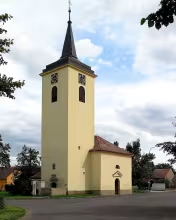
The Church of Saint John Nepomucene in Slatina is a Roman Catholic filial church with a rich architectural history spanning several centuries. Located in the village of Slatina within the Ústecký kraj region, it showcases evolving styles from Gothic origins to Baroque and Classical modifications. Declared a cultural monument in 1964, it stands beside a cemetery and features a prominent Renaissance tower that enhances its historical significance.
The village of Slatina was first documented in 1057, with the church mentioned as early as 1384. The Gothic core dates back to the mid-14th century, reflecting Bohemian architectural trends during the Holy Roman Empire era. In 1595, a Renaissance tower was added, marking an important development phase.
Architecturally, the church began as a Gothic structure with oblong walls and a polygonal presbytery. The addition of the Renaissance tower in 1595 is striking, featuring a polychrome finish and a chronogram on the northern portal commemorating its construction. Baroque period alterations and 19th-century changes resulted in a blend of styles, with spired facades and large semi-circular windows.
Inside, the church houses several notable features: a Rococo main altar refurbished in the 19th century, an image of Saint John Nepomucene from the same era, and a pulpit crafted by Třebenice carpenter M. Polák in 1747. A Gothic Madonna dating back to between 1380 and 1390 is also preserved, alongside Rococo candelabras.
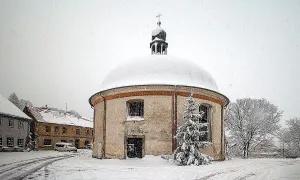
The surrounding area includes a Baroque oblong belfry from the early 18th century on former cemetery grounds. This belfry features an arched portal with pilasters, a semi-circular window, and decorative elements that enhance its architectural appeal.
Today, the Church of Saint John Nepomucene remains accessible to visitors interested in its historical and architectural significance. Its status as a cultural monument underscores its importance not only as a place of worship but also as a valuable piece of Slatina's heritage. Visitors can appreciate the blend of styles that tell the story of this church’s evolution over centuries, making it a worthwhile destination for those keen on history and architecture.
Historical milestones
- 1057
- The village of Slatina was first documented.
- 1319
- Slatina was emphyteutically granted by the provost of Litoměřice.
- 1384
- A church at this location is mentioned for the first time.
- 1595
- The Renaissance tower was constructed.
Architectural development
The Church of Saint John Nepomucene began as a Gothic structure in the mid-14th century. It underwent Baroque modifications and further alterations in the 19th century, blending elements of Baroque and Classical styles. The Renaissance tower, added in 1595, is a prominent feature.
Historical events
The church's Gothic core was established around the mid-14th century.
In 1595, a significant Renaissance tower was added to the structure.
Points of interest
- The Renaissance tower of the Church of Saint John Nepomucene features a chronogram on its northern portal, which is an inscription that encodes the date of construction through numerical values assigned to letters.
- Inside the church, there is a Gothic Madonna statue dating back to between 1380 and 1390, making it one of the oldest artistic elements within the structure, predating many other features by centuries.
Guide
Show guide text
Welcome to the Church of Saint John Nepomucene in Slatina—a remarkable testament to centuries of architectural evolution and spiritual devotion. As you stand before this historic edifice, take a moment to absorb its serene presence amidst the tranquil surroundings of Ústecký kraj.
The story of this church begins with the village of Slatina itself, first documented back in 1057. Over time, the community grew under the auspices of religious and civic leaders, leading to significant developments. By 1319, Slatina was granted emphyteutically by the provost of Litoměřice, marking an era of increased autonomy and development for the village.
The church's origins trace back even further, with its first mention in historical records dating to 1384. Originally constructed in the Gothic style during the mid-14th century, this sacred space has witnessed numerous transformations. Architectural modifications over the centuries have imbued it with Baroque and Classical elements, each layer telling a story of changing tastes and influences.
As you approach, take note of its distinctive square nave and polygonal presbytery—a testament to the church's enduring Gothic roots. The Renaissance tower, added in 1595, stands as a striking feature, inviting you to look closer at its intricate details. Here, on the northern portal, lies a chronogram—an inscription that cleverly encodes the date of construction through numerical values assigned to letters.
Inside, your attention is drawn to a Gothic Madonna statue dating back to between 1380 and 1400. This exquisite piece captures the essence of medieval devotion and artistry, offering a tangible connection to the past.
While specific architects and historical figures associated with this church remain unknown, its very existence speaks volumes about the community's dedication to faith and heritage throughout the ages.
As you continue your exploration, consider the layers of history embedded within these walls. Each stone and carving holds secrets waiting to be discovered. We invite you to delve deeper into the stories that have unfolded here over centuries.
Thank you for joining us on this journey through time at the Church of Saint John Nepomucene. May your visit inspire further curiosity and appreciation for the rich tapestry of history surrounding this remarkable site.
Tips for visitors
The best time to visit the Church of Saint John Nepomucene in Slatina is during late spring or early autumn when the weather is mild, making it pleasant for exploring both the church and its surroundings. These seasons offer a balance between comfortable temperatures and beautiful natural scenery, enhancing your experience as you explore the Gothic architecture and Baroque belfry nearby.
Parking and transportation options are available to accommodate visitors. The area can be accessed by car or public transport; however, it's advisable to check current routes and schedules in advance using a travel planner. Upon arrival, parking is generally accessible near the church grounds, allowing for convenient access on foot.
When planning your visit, consider bringing comfortable walking shoes as you may want to explore the area around the church, including its historical cemetery grounds. A camera or smartphone with a good camera can be useful for capturing the architectural details of both the Gothic church and the Baroque belfry. Additionally, carrying a light jacket is recommended in case the weather changes.
Photography enthusiasts will find several spots ideal for capturing the Church of Saint John Nepomucene's beauty. The best lighting conditions are typically during the early morning or late afternoon when the sunlight casts soft shadows and highlights the intricate details of the church's architecture. The southeast side, near the Baroque belfry, offers a picturesque backdrop.
For families with children, the visit can be both educational and enjoyable. While exploring the church, you might discuss its historical significance and architectural style to engage younger visitors. Nearby, within a 30-minute drive or walk, are areas that offer more open spaces for children to play and explore, such as local parks or nature trails, providing a well-rounded day out.
Businesses nearby
Do you run a restaurant, accommodation, shop, museum, rental, wellness or other visitor service near this monument? Show yourself directly to the people heading to it — this is how they will see you in the app and on the web:
Nearby
To the southeast of the church stands a Baroque oblong belfry from the early 18th century, located on the former cemetery grounds.
Accommodation nearby
Trips and activities nearby
Guided tours, tickets and activities nearby from GetYourGuide
Search tours and activities →Themed route
Tematická výletní trasa: Kostel svatého Jana Nepomuckého a jeho okolí
1. Kostel svatého Jana Nepomuckého (Slatina) *Typ:* Historická památka *Proč stojí za návštěvu:* Tento barokní kostel je významnou kulturní památkou, která přitahuje návštěvníky svou architektonickou krásou a historií. Je to místo klidu a úcty, kde můžete prozkoumat bohaté interiéry a užít si pohled na okolní krajinu.
2. Barokní obdélníkový věž (Slatina) *Typ:* Historická památka *Proč stojí za návštěvu:* Nacházející se na bývalých hřbitovních pozemcích, je tato barokní věž z počátku 18. století fascinujícím příkladem architektury té doby. Její umístění podél kostela nabízí krásný pohled na okolí a je ideálním místem pro fotografování.
3. Bývalé hřbitovní pozemky (Slatina) *Typ:* Historická lokalita *Proč stojí za návštěvu:* Tato místa, která kdysi sloužila jako hřbitov, poskytují vhled do historie a kultury obce. Procházka po těchto pozemcích vám umožní cítit spojení s minulostí a užít si klidné okolí kolem kostela svatého Jana Nepomuckého.
Tato trasa nabízí návštěvníkům možnost prozkoumat historický význam a architektonickou krásu oblasti kolem kostela svatého Jana Nepomuckého, zatímco se ponoří do klidné atmosféry Slatiny.
Seasonal recommendations
Spring: The arrival of spring brings a vibrant atmosphere to the Church of St. John Nepomucene, with blooming flowers and lush greenery surrounding Slatina. This season offers a refreshing escape as nature awakens, providing picturesque views that enhance the historical charm of the church. Visitors can enjoy pleasant weather ideal for exploring both indoors and outdoors. It's advisable to wear comfortable layers as temperatures can vary, and arriving in the morning helps avoid larger crowds that gather later in the day.
Summer: Summer at the Church of St. John Nepomucene is marked by long daylight hours and warm temperatures, making it a perfect time for outdoor activities around Slatina. The church grounds are filled with lush greenery, creating an inviting atmosphere for leisurely walks or picnics. However, this season also sees higher visitor numbers, so arriving early is recommended to enjoy the site more peacefully. Light clothing and sun protection are essential due to the heat.
Autumn: Autumn transforms Slatina into a tapestry of warm colors as leaves change from green to shades of orange, red, and yellow. The cooler weather makes it an ideal time for exploring the Church of St. John Nepomucene without the summer crowds. This season offers a serene atmosphere perfect for photography or quiet reflection. Visitors should dress in layers to accommodate fluctuating temperatures and consider bringing a light jacket as evenings can be chilly.
Winter: Winter envelops the Church of St. John Nepomucene in a tranquil, snow-covered landscape that adds a magical quality to its historical architecture. The colder months bring shorter days and potentially challenging weather conditions, so planning is essential. Visitors should dress warmly with coats, hats, and gloves, and check opening hours as they may be reduced during this time. Despite the cold, winter offers a unique opportunity to experience the church in a peaceful setting, away from the summer crowds.
Visualizations and artistic views

Vizualizace jsou generovány umělou inteligencí a slouží jako inspirace.


Tips from visitors
No tips yet. Be the first!
Log in and add your tip.



Reviews and comments