




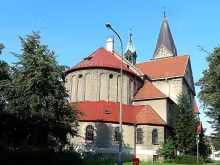
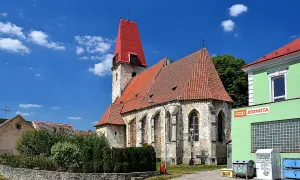
The Church of Saint John Nepomucene in České Budějovice is a Roman Catholic church located on Linecké Předměstí. It features Secession style architecture and holds historical significance. Designed by Anton Möller, it was constructed between 1914 and 1915 as part of efforts to establish a new cathedral for the city.
The origins of this church are rooted in early 20th-century aspirations to enhance České Budějovice's religious and cultural landscape. Initially aimed at constructing a new cathedral, Bishop Martin Říha initiated a fund for this purpose. However, World War I caused material shortages and labor scarcity, shifting the focus to building this church instead. Construction began in 1914, culminating in its consecration on September 12, 1915.
Architecturally, the Church of Saint John Nepomucene is distinguished by its Secession style, characterized by a half-circular apse with Beuronese elements. This unique combination reflects artistic trends of the time and contributes to the church's aesthetic appeal. The interior features a Baroque painting titled "Apoteóza svatého Jana Nepomuckého" (Apotheosis of Saint John Nepomucene) by Franz Anton Maulbertsch, originally from St. Nicholas Cathedral, adding historical depth to its artistic offerings.
The church's organ is another highlight. Initially designed by Heinrich Schiffner and completed by Josef Růžička after Schiffner’s firm dissolved during the war, it underwent reconstruction in 2014. This revealed that much of the work was done by Růžička rather than Schiffner, contrary to earlier assumptions. The organ is a significant cultural artifact, being one of the largest in southern Bohemia with three manuals and 49 registers.
Today, the Church of Saint John Nepomucene remains an important cultural and historical site in České Budějovice. Its unique architectural style and rich history make it a worthwhile visit for those interested in ecclesiastical architecture and local heritage. The church continues to serve as a testament to the city's religious aspirations during a tumultuous period, inviting visitors to explore its artistic and historical treasures.
Historical milestones
- 1914
- Zahájení stavby kostela svatého Jana Nepomuckého.
- 1915
- Konzekrace kostela svatého Jana Nepomuckého dne 12. září.
- kolem 1750
- Barokní malba 'Apoteóza svatého Jana Nepomuckého' od Franza Antonia Maulbertsche přenesena do kostela.
- 2014
- Rekonstrukce varhanního nástroje v kostele.
Architectural development
The Church of Saint John Nepomucene was built in the Secession style with a half-circular apse featuring Beuronese elements. The main altar houses a Baroque painting by Franz Anton Maulbertsch. The church's organ, designed by Heinrich Schiffner and completed by Josef Růžička, underwent reconstruction in 2014.
Historical events
The construction began in 1914 as part of efforts to establish a new cathedral for České Budějovice.
Due to World War I, the building process faced challenges such as material shortages and labor scarcity.
The church was consecrated on September 12, 1915.
Points of interest
- Although originally intended to be a cathedral, the Church of Saint John Nepomucene was downsized due to World War I's impact on resources and labor availability, illustrating how global events can alter local architectural plans.
Guide
Show guide text
Welcome to the historic Church of Saint John Nepomucene in České Budějovice! As you stand here on Linecké Předměstí, take a moment to absorb the serene atmosphere surrounding this remarkable structure. The church's distinctive half-circular apse catches your eye, an architectural element that hints at its unique design.
Let’s delve into the story of how this church came to be. Construction began in 1914 and was completed just a year later in 1915, thanks to the visionary designs of Anton Möller. Originally intended to serve as a cathedral, the plans were scaled back due to World War I's impact on resources and labor availability—a testament to how global events can influence local architecture.
As you look around, notice the Secession style that defines this church. The design is characterized by its elegant curves and Beuronese elements, which give it an artistic flair uncommon in many religious buildings of its time. Inside, your attention might be drawn to a stunning Baroque painting depicting the apotheosis of Saint John Nepomucene. This artwork, created by Franz Anton Maulbertsch around 1750, was later moved here and adds a layer of historical depth to the church's interior.
While exploring, consider the organ housed within this sacred space. In 2014, it underwent a fascinating reconstruction—a nod to the ongoing efforts to preserve its musical heritage. This instrument holds stories of countless services and melodies that have echoed through these walls over the years.
Before you move on, take a moment to appreciate how history has shaped this church. From its ambitious beginnings to its adaptation during wartime challenges, each detail tells part of its story.
We invite you to continue exploring České Budějovice's rich cultural tapestry and discover more hidden gems in the area. Thank you for joining us on this journey through time at the Church of Saint John Nepomucene. Enjoy your visit!
Businesses nearby
Do you run a restaurant, accommodation, shop, museum, rental, wellness or other visitor service near this monument? Show yourself directly to the people heading to it — this is how they will see you in the app and on the web:
Accommodation nearby
Trips and activities nearby
Guided tours, tickets and activities nearby from GetYourGuide
Search tours and activities →Themed route
Tematická výletní trasa: Kostel svatého Jana Nepomuckého a okolí
1. Kostel svatého Jana Nepomuckého *Typ:* Religiózní památka *Proč stojí za návštěvu:* Kostel svatého Jana Nepomuckého je nejstarším barokním chrámem v Českých Budějovicích a jednou z nejznámějších památek města. Jeho impozantní architektura, bohaté interiéry a historický význam jako místo spojené s legendou svatého Jana Nepomuckého přitahují návštěvníky z celého světa. Navíc je možné prozkoumat kostelní interiér a podrobnosti o jeho významu.
2. Náměstí Svobody *Typ:* Městské náměstí *Proč stojí za návštěvu:* Nachází se přímo naproti kostelu svatého Jana Nepomuckého a je centrem města České Budějovice. Náměstí Svobody je známé svým historickým významem, krásnou architekturou a živým ambience. Je to ideální místo pro odpočinek po návštěvě kostela nebo pro procházku podél jeho elegantních ulic.
3. Kostel svatého Vavřince *Typ:* Religiózní památka *Proč stojí za návštěvu:* Tento kostel, nacházející se v blízkosti Náměstí Svobody, je dalším historickým a architektonicky zajímavým místem. Jeho gotické prvky a barokní interiér představují bohatou historii Českých Budějovic. Kostel svatého Vavřince je také známý pro svůj vysoký varhanní oltář, který je jednou z nejslavnějších barokních děl ve městě.
4. Radnice *Typ:* Historický památník *Proč stojí za návštěvu:* Nachází se na Náměstí Svobody a je jednou z nejstarších budov v Českých Budějovicích. Radnice s jejím gotickým interiérem, historickými freskami a působivým vzhledem představuje důležitou část městského života po staletí. Je to ideální místo pro pochopení historie a kultury Českých Budějovic.
5. Kostel svaté Anny *Typ:* Religiózní památka *Proč stojí za návštěvu:* Tento kostel je dalším významným barokním chrámem v Českých Budějovicích. Nachází se nedaleko Náměstí Svobody a přitahuje svou elegantní architekturou, bohatými interiéry a historickým významem. Kostel svaté Anny je také známý pro svůj působivý varhanní oltář, který přidává k jeho atraktivitě.
Tato trasa nabízí návštěvníkům možnost prozkoumat nejen kostel svatého Jana Nepomuckého, ale i další historické a architektonicky významné místa v Českých Budějovicích.
Seasonal recommendations
Spring: Visiting the Church of Saint John Nepomucene in České Budějovice during spring offers a unique experience as nature awakens around this historic site. The surrounding greenery is lush and vibrant, with blossoming trees casting dappled light through stained glass windows, enhancing the church's serene atmosphere. This season is ideal for photography enthusiasts who wish to capture the interplay of natural beauty and architectural splendor. To make the most of your visit, consider arriving in the morning when the crowds are thinner, allowing you a more intimate exploration of the site. Dress comfortably yet warmly, as temperatures can still be quite cool, especially in shaded areas.
Summer: Summer is a popular time to visit the Church of Saint John Nepomucene due to its favorable weather and extended daylight hours, which provide ample opportunity for sightseeing. The church's exterior and interior are beautifully illuminated by natural light, accentuating architectural details and artwork. However, this season also brings larger crowds, particularly during peak tourist periods in July and August. To avoid the busiest times, plan your visit early in the morning or later in the afternoon when temperatures are more bearable. Light clothing is advisable, along with a hat and sunscreen for outdoor areas.
Autumn: Autumn transforms the Church of Saint John Nepomucene into a picturesque setting, as the surrounding landscape adopts warm hues of reds, oranges, and yellows. The cooler weather makes it comfortable to explore both inside and outside the church, while the softer light enhances the stained glass windows' colors. This season is less crowded than summer, offering a more peaceful visit. Dress in layers to accommodate fluctuating temperatures throughout the day. Late afternoon visits are particularly enchanting as the setting sun casts golden hues over the historic site.
Winter: In winter, the Church of Saint John Nepomucene exudes a magical atmosphere with its snow-covered surroundings and festive decorations that may adorn the area during holiday seasons. The stark beauty of bare trees against the church's architecture creates a striking visual contrast. However, shorter daylight hours mean planning your visit is crucial; arriving early ensures you have enough time to appreciate both the interior and exterior before closing. Dress warmly in layers, including a coat, hat, gloves, and sturdy shoes, as temperatures can be quite chilly. Be mindful of potentially limited accessibility due to snow or ice on pathways.
Visualizations and artistic views

Vizualizace jsou generovány umělou inteligencí a slouží jako inspirace.


Tips from visitors
No tips yet. Be the first!
Log in and add your tip.
Reviews and comments