




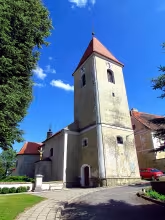
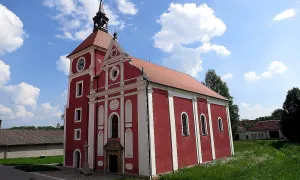
The Church of Saint James the Elder in Krhov is a testament to the rich historical tapestry of Czech Republic's religious architecture. Situated centrally within the village on an elevated terrace, this single-nave early Baroque church features a polygonal end and holds cultural significance. It serves as the parish church for the Roman Catholic community and has been recognized as a cultural monument due to its historical transitions in religious affiliations.
The origins of the Church date back to around 1253 when it was first mentioned with a parish priest named Eneas de Gurrihev. Initially a Catholic institution, the church underwent significant changes during the Reformation period. By 1531, it remained Catholic but was transferred to Protestants before 1575. After the Battle of White Mountain in 1620, the church reverted to Catholicism.
Architecturally, the church reflects the early Baroque style that emerged in the 17th century, marking a transformation from its medieval roots into its current form. Over the years, several additions and modifications have been made to enhance its structure and artistic elements. In 1808, a statue of Saint Fabian was acquired, adding to the church's religious iconography. Around 1839, a conical tower was added, enhancing both its aesthetic appeal and structural integrity. The church saw further expansion in 1882 with the addition of a Holy Sepulchre niche, followed by the acquisition of a statue of Our Lady of Lourdes in 1890. A significant reconstruction occurred in 1902, focusing on the main altar, underscoring the ongoing commitment to maintaining and enhancing its sacred space.
The church's interior is adorned with three tablets embedded in its walls, bearing inscriptions of those buried there, adding historical depth to its spiritual ambiance. Additionally, the tower houses three bells, contributing to the auditory heritage of the site.
Today, the Church of Saint James the Elder remains an accessible and cherished landmark within Krhov. Its historical significance, coupled with architectural beauty, makes it a compelling destination for visitors interested in exploring the religious and cultural history of the region. The church not only serves as a place of worship but also stands as a symbol of resilience through centuries of religious and political changes. Visitors are invited to experience this remarkable monument, where history and spirituality converge in a serene setting.
Historical milestones
- 1808
- A statue of Saint Fabian was acquired.
- 1839
- A conical tower was added to the church.
- 1882
- The church was expanded with a Holy Sepulchre niche.
- 1890
- A statue of Our Lady of Lourdes was obtained.
- 1902
- Major reconstruction focused on the main altar.
Architectural development
The church underwent significant architectural changes in the 17th century when it was transformed into its current early Baroque style. In 1808, a statue of Saint Fabian was acquired, and around 1839, a conical tower was added. The church was expanded with a Holy Sepulchre niche in 1882, and a statue of Our Lady of Lourdes was obtained in 1890. A major reconstruction occurred in 1902, focusing on the main altar.
Historical events
Around 1253, the church was mentioned with a parish priest named Eneas de Gurrihev.
In 1531, the church was Catholic before being transferred to Protestants before 1575.
After the Battle of White Mountain in 1620, it reverted to Catholicism.
Points of interest
- The Church of Saint James the Elder has a unique historical narrative involving multiple religious transitions; it was first Catholic, then Protestant during the Reformation, and reverted to Catholicism after the Battle of White Mountain in 1620.
- An intriguing artifact within the church is a statue of Saint Fabian acquired in 1808, enriching its collection of religious iconography and reflecting the evolving artistic tastes over centuries.
Guide
Show guide text
Welcome to the Church of Saint James the Elder in Krhov, a remarkable testament to history and spirituality nestled within this charming village. As you stand here on this elevated terrace, take a moment to absorb your surroundings—the serene atmosphere envelops you as sunlight filters through the church's windows, casting gentle patterns across its façade.
This single-nave early Baroque structure captivates with its polygonal end, hinting at layers of history beneath its surface. The Church likely integrates elements from its medieval origins and has served as a beacon for the Roman Catholic community over the centuries. As you take in this sight, imagine the generations who have gathered here before you.
The church's journey through time is rich with stories. Initially built as a Catholic sanctuary, it embraced Protestantism during the Reformation, only to return to its Catholic roots following the pivotal Battle of White Mountain in 1620. This transformation speaks volumes about the resilience and adaptability of faith communities throughout history.
As you move closer, take note of the church's interior treasures. The main altar stands as a focal point, surrounded by two side altars that add depth to this sacred space. A niche dedicated to the Holy Sepulchre invites contemplation, its presence marking an expansion in 1882. Each element within these walls tells a story of devotion and artistry.
Throughout its history, the church has been adorned with significant artifacts. In 1808, it acquired a statue of Saint Fabian, adding to its spiritual tapestry. The addition of a conical tower in 1839 further enhanced its architectural allure. By 1890, a statue of Our Lady of Lourdes was obtained, enriching the church's collection and inviting reverence.
Perhaps one of the most intriguing aspects is the church's ability to encapsulate multiple religious transitions within its walls—a narrative that continues to resonate with visitors today. This layering of history invites you to explore not just the physical space but also the stories it harbors.
As your visit draws to a close, we invite you to linger in this tranquil setting, reflecting on the journey through time and faith that has unfolded here. The Church of Saint James the Elder is more than a structure; it's a living chronicle waiting for you to discover its secrets. Thank you for joining us today, and may your exploration be both enlightening and inspiring.
---
Feel free to explore further and uncover the many layers this historic church has to offer.
Tips for visitors
The best time to visit the Church of Saint James the Elder in Krhov is during late spring or early autumn when the weather is pleasant, and the surrounding landscape is lush with greenery. During these months, you can enjoy a comfortable walk through the village without the summer crowds or winter chill. The lighting conditions are also ideal for photography, allowing you to capture the church's architectural details in natural light.
Parking near the Church of Saint James the Elder is generally convenient as there are spaces available within the village itself. For those preferring public transport, Krhov can be reached by bus from nearby towns; however, it's advisable to check current schedules and routes online before your visit. The church’s central location in the village makes it easily accessible on foot from both parking areas and bus stops.
When visiting, consider bringing comfortable walking shoes as you may want to explore the surrounding area of Krhov after viewing the church. A camera or smartphone is recommended for capturing the picturesque views and architectural details of the church. Additionally, carrying a light jacket can be beneficial due to variable weather conditions in the region.
For photography enthusiasts, the best spots to capture the Church of Saint James the Elder are from the elevated terrace where it stands, offering a panoramic view of the village and its surroundings. Early morning or late afternoon provides soft lighting that accentuates the church’s Baroque features. Inside, natural light streams through windows, creating beautiful contrasts for interior shots.
Within a 30-minute drive from Krhov, visitors can explore other historical sites such as the nearby castles and chateaus in the Vysočina region. These locations provide additional cultural insights and scenic landscapes ideal for day trips. Families with children will find these areas engaging due to their open spaces and interactive exhibits.
For families visiting with children, Krhov offers a peaceful environment to explore at a leisurely pace. The village itself is walkable and safe for kids. While the church may not have specific attractions for younger visitors, its serene setting provides an excellent opportunity for family walks and picnics in the surrounding areas.
Businesses nearby
Do you run a restaurant, accommodation, shop, museum, rental, wellness or other visitor service near this monument? Show yourself directly to the people heading to it — this is how they will see you in the app and on the web:
Accommodation nearby
Themed route
Tematická výletní trasa: Kostel svatého Jakuba Staršího (Krhov)
1. Kostel svatého Jakuba Staršího (Kostel) - Začněte svůj výlet u samotného kostela, který je nejen architektonickou perli obce Krhov, ale také důležitým historickým a kulturním centrem. Tento barokní kostel s bohatě zdobeným interiérem nabízí návštěvníkům pohled na uměleckou hodnotu z 17. století, kdy byl postaven. Je to ideální místo pro ty, kteří mají rádi historii a architekturu.
2. Obec Krhov (Městská část) - Prozkoumejte samotnou obec Krhov, která se pyšní klidem venkovského prostředí a krásnými pohledy na okolní krajinu. Obec nabízí návštěvníkům možnost prozkoumat místní tradiční českou kulturu, včetně malebných domů a zelených prostor, které jsou ideální pro krátký pohled nebo relaxaci.
3. Kostel svatého Jakuba Staršího - Vnitřní expozice (Expozice) - Pokračujte v návštěvě kostela, tentokrát se zaměřením na jeho interiér. Zde můžete prozkoumat umělecké prvky jako sochy a fresky, které představují bohatý duchovní život oblasti. Vnitřní expozice nabízí návštěvníkům hlubší vhled do historie a významu kostela pro místní komunitu.
4. Kostel svatého Jakuba Staršího - Nádvoří (Nádvoří) - Zavěšte si chvíli na nádvoří kostela, kde můžete užít klidné chvilky a prohlédnout se po okolním prostředí. Nádvoří je ideálním místem pro relaxaci nebo fotografování, s výhledy na kostel a jeho architektonické detaily.
5. Okolní zelené plochy (Přírodní prostor) - Konečně si užijte okolní zelené plochy, které nabízejí místo pro krátkou procházku nebo relaxaci. Tyto oblasti jsou ideální pro ty, kdo chtějí vychutnat si přírodní krásy regionu Vysočiny a zároveň si užít klidného času mimo hluk měst.
Tato trasa nabízí kombinaci historických, kulturních a přírodních atrakcí, které jsou snadno dostupné v obci Krhov.
Seasonal recommendations
Spring: Visiting the Church of Saint James the Elder during spring offers a unique experience as nature awakens around Krhov. The blooming wildflowers and budding trees create a picturesque backdrop, enhancing the church's historical charm with vibrant colors and fresh scents. This season is ideal for photography enthusiasts looking to capture the interplay between architecture and natural beauty. While the weather can be unpredictable, it’s advisable to wear layers that can accommodate both cool mornings and warmer afternoons. As visitor numbers are moderate, this period provides a more tranquil atmosphere compared to peak tourist seasons.
Summer: Summer is an excellent time for exploring the Church of Saint James the Elder due to its extended daylight hours, which illuminate the church's architectural details beautifully. The warm weather invites visitors to enjoy outdoor activities around Krhov before or after their visit. However, this period can attract larger crowds, especially during the main tourist season in July and August. To avoid long waits, consider arriving early in the day. Comfortable walking shoes and light clothing are recommended for exploring both indoor and outdoor spaces comfortably.
Autumn: Autumn brings a serene and colorful ambiance to Krhov, with the Church of Saint James the Elder set against a backdrop of golden leaves and crisp air. The changing foliage provides an enchanting setting that complements the church's historical architecture. This season typically sees fewer visitors, offering a quieter experience for those who appreciate history in a more peaceful environment. Layered clothing is essential to stay warm as temperatures drop, particularly later in the day.
Winter: Winter transforms Krhov into a quiet and contemplative destination with the Church of Saint James the Elder standing majestically amidst snow-covered landscapes. The church may be illuminated by soft lights during the darker months, creating a magical atmosphere perfect for photography or reflection. However, visitor numbers can dwindle due to shorter opening hours and potential weather-related closures. It's crucial to dress warmly in layers and check ahead for any seasonal adjustments to visiting times. Despite these challenges, winter offers a unique opportunity to experience the church in its tranquil state.
Visualizations and artistic views

Vizualizace jsou generovány umělou inteligencí a slouží jako inspirace.


Tips from visitors
No tips yet. Be the first!
Log in and add your tip.

Reviews and comments