





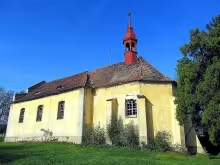
The Church of Saint Catherine in Kněžice is a Roman Catholic parish church situated on a low hill at the village's southern edge. This baroque-style building features a distinctive bell tower with a polygonal, heritage-protected design topped by a wooden attic. It stands as one of the few documented transitions from a wooden to a stone church in 14th-century Northern Bohemia, highlighting its historical significance.
The origins of the Church of Saint Catherine date back to at least 1358 when Hrzko was mentioned as a parish priest, indicating an earlier wooden structure. By 1392, Oldřich Čachborův, then owner and žatecký rychtář, initiated its transformation from wood to stone with financial backing, starting with a contribution of twenty kop. This transition reflects broader architectural trends across Europe during that era. The church's evolution continued through various phases, including significant reconstruction in 1687 under architect Domenig Rigo, who introduced structural changes such as an extended nave and a new bell tower.
Architecturally, the Church of Saint Catherine underwent several transformations. Initially wooden, it was rebuilt into stone starting in 1392. The baroque reconstruction led by Domenig Rigo in 1687 added significant elements like an extended nave and a polygonal bell tower design. Despite its historical importance, the church has suffered from neglect, leading to severe structural damage over time.
Throughout its history, the church experienced changes in ownership and administration. After losing its parish status during the Thirty Years' War, it became affiliated with several other churches before regaining its parish status in 1729. The first farář after this restoration was Franz Ernst Czech, a native of Žatec. Over time, the church's fortunes fluctuated, reflecting broader socio-political changes in Northern Bohemia.
Key events include its initial mention in 1358 and Oldřich Čachborův's financial initiative in 1392 to transition from wood to stone. The reconstruction in 1687 under Domenig Rigo marked a significant architectural development. Despite these milestones, the church has faced challenges like vandalism and neglect, leading to its current deteriorated state.
Today, the Church of Saint Catherine stands as a testament to historical transitions and architectural evolution, despite severe structural damage. The interior is simple and undecorated, with notable elements like a baroque façade and a náhrobník from 1633. Efforts by the spolek Pro kostely since 2014 aim to preserve this heritage site, though challenges remain due to past neglect. Visitors can explore its historical significance and architectural features, making it a worthwhile destination for those interested in Northern Bohemia's rich history.
The Church of Saint Catherine offers a unique glimpse into the architectural and cultural transformations of medieval Northern Bohemia. Its journey from a wooden structure to a stone church reflects broader European trends and local socio-political changes. Despite its current state, the church remains a valuable historical monument worth visiting for those interested in exploring the region's past.
Historical milestones
- 1358
- Hrzko mentioned as parish priest.
- 1392
- Initiation of transition from wood to stone by Oldřich Čachborův.
- 1687
- Reconstruction led by architect Domenig Rigo.
- 1729
- Regained parish status after Thirty Years' War.
- 2014
- Preservation efforts began by spolek Pro kostely.
Architectural development
Originally a wooden structure mentioned in 1358, the Church of Saint Catherine underwent significant transformation into a stone building starting in 1392. The baroque reconstruction led by Domenig Rigo in 1687 introduced new architectural elements such as an extended nave and a bell tower. Despite its historical significance, the church has suffered from neglect, leading to severe structural damage.
Historical events
- 1358
- First mention of a parish priest, Hrzko, indicating the existence of an earlier wooden church.
- 1392
- Oldřich Čachborův initiated the transformation from a wooden to a stone church with financial support.
- 1687
- The church was reconstructed according to plans by architect Domenig Rigo, featuring significant structural changes.
Points of interest
- The Church of Saint Catherine is one of the few documented examples in Northern Bohemia where a church transitioned from wood to stone during the 14th century, reflecting broader architectural trends across Europe at that time.
- After losing its parish status during the Thirty Years' War, the church was affiliated with several other churches before regaining its parish status in 1729, highlighting the socio-political upheavals affecting religious institutions in the region.
Guide
Show guide text
Welcome to the Church of Saint Catherine in Kněžice, a serene and historic site nestled on a low hill at the southern edge of this charming village. As you stand here, take a moment to absorb your surroundings. The church presents itself with an understated elegance that belies its rich history, marked by layers of architectural evolution.
The origins of this sacred place date back to the 14th century when it underwent one of the rare documented transitions in Northern Bohemia—from wood to stone. This transformation began around 1392 under the guidance of Oldřich Čachborův, reflecting broader European trends during that era. The church has weathered centuries of change, including significant reconstruction led by architect Domenig Rigo in 1687.
As you look at the church now, notice its baroque style, characterized by a distinctive bell tower with a polygonal structure. This heritage-protected feature is topped by a wooden attic that adds to the building's unique charm. Inside, the simplicity and lack of decoration speak volumes about its historical significance—its walls have witnessed centuries unfold.
Let’s delve into some key figures associated with this site. Hrzko, mentioned as parish priest in 1358, was among the early caretakers of this spiritual haven. The church regained its parish status after a tumultuous period during the Thirty Years' War, reinstated in 1729—a testament to its resilience and importance to the local community.
One intriguing aspect of Saint Catherine's Church is its architectural journey from wood to stone, a rare occurrence documented in Northern Bohemia. This transformation offers a glimpse into the adaptive strategies employed by builders of that time, ensuring the church’s endurance through centuries.
As you continue your exploration, consider joining the efforts of spolek Pro kostely, which began preservation work in 2014, dedicated to maintaining this cultural treasure for future generations.
Thank you for visiting. We invite you to delve deeper into its history and perhaps even join in preserving its legacy as you move forward on your journey through Kněžice.
Tips for visitors
The best time to visit the Church of Saint Catherine in Kněžice is during late spring or early autumn when the weather is pleasant, allowing you to comfortably explore both the church grounds and its surrounding natural landscapes typical of Northern Bohemia. During these seasons, the area's flora is particularly vibrant, enhancing your experience with beautiful views around the low hill where the church is located.
Parking and transportation options are convenient for visitors. The church can be accessed by car, with parking available nearby; however, it's advisable to check local resources or maps for specific details as they may change. For those preferring public transport, there are routes that connect to Kněžice, but you should verify current schedules through a travel planner or local transit website.
When visiting the Church of Saint Catherine, consider bringing comfortable walking shoes and weather-appropriate clothing, especially if you plan to explore the surrounding cemetery area. A camera is recommended for capturing the church's baroque architecture and the distinctive bell tower, which are particularly photogenic during the golden hours of early morning or late afternoon when the light casts a soft glow over the structures.
For photography enthusiasts, the best spots include the southern edge where the church sits on the hill, offering panoramic views. The natural lighting in the early morning or late afternoon will enhance the textures and colors of the baroque architecture. Additionally, capturing images from within the cemetery can provide unique perspectives with the bell tower as a backdrop.
In terms of nearby attractions within 30 minutes, you might explore other historical sites or enjoy the scenic landscapes typical to Northern Bohemia. These areas offer opportunities for leisurely walks and appreciation of local history and nature. Families with children will find the natural surroundings inviting for outdoor activities.
Businesses nearby
Do you run a restaurant, accommodation, shop, museum, rental, wellness or other visitor service near this monument? Show yourself directly to the people heading to it — this is how they will see you in the app and on the web:
Nearby
Located in the village of Kněžice, the church is surrounded by a cemetery that incorporates the bell tower and mortuary. The area features natural landscapes typical of Northern Bohemia.
Accommodation nearby
Themed route
Thematic Walking Tour: Kněžice Village and Church of Saint Catherine
1. Church of Saint Catherine (Kněžice) *Type:* Historical Landmark *Why Visit:* This church, nestled in the heart of Kněžice village, is a serene testament to Northern Bohemia's architectural heritage. The site offers visitors a glimpse into the region's religious history and provides an opportunity for reflection amidst its peaceful surroundings.
2. Church Cemetery *Type:* Cultural Site *Why Visit:* Surrounding the Church of Saint Catherine, this cemetery is not only a resting place but also incorporates a bell tower and mortuary that add to its historical significance. The area offers a tranquil setting where visitors can appreciate the blend of natural beauty with cultural heritage.
3. Surrounding Natural Landscapes *Type:* Scenic Area *Why Visit:* The landscapes around Kněžice are characteristic of Northern Bohemia, featuring lush greenery and rolling hills that provide a picturesque backdrop to your visit. These natural settings offer an ideal environment for leisurely walks or simply enjoying the serene atmosphere.
This tour allows visitors to immerse themselves in the unique charm of Kněžice, exploring its historical sites and natural beauty without venturing far from the village center.
Seasonal recommendations
Spring: Visiting the Church of Saint Catherine during spring offers a unique experience as nature awakens around Kněžice, with blossoming flowers and fresh greenery enhancing the church's historic charm. The soft light filtering through budding trees creates a serene atmosphere that contrasts beautifully with the church’s deteriorating structure. Visitors should dress in layers to accommodate fluctuating temperatures and bring along comfortable walking shoes for exploring nearby trails. While this period is less crowded than summer, it remains an ideal time to appreciate the tranquil beauty of the surroundings.
Summer: Summer at the Church of Saint Catherine is marked by long daylight hours that illuminate its architectural details, despite its poor condition. The lush greenery and vibrant wildflowers create a picturesque backdrop, making it perfect for photography enthusiasts. However, this season also brings larger crowds, especially during peak travel times, so arriving early in the day is advisable to avoid congestion. Wearing light clothing and sun protection is essential due to the warm weather, ensuring a comfortable visit.
Autumn: Autumn transforms Kněžice into a tapestry of reds, oranges, and yellows, offering a stunning visual contrast against the church's aged facade. The cooler temperatures make for pleasant strolls around the area, though visitors should be prepared with warmer layers as evenings can become chilly. This season is ideal for those who enjoy quieter visits, as it falls outside the main tourist peak, allowing for more intimate exploration of the site’s historical significance.
Winter: In winter, the Church of Saint Catherine exudes a mystical charm under a blanket of snow or amidst frosty weather conditions. The stark beauty of this season provides a dramatic setting that highlights the church's architectural features in a unique way. However, visitors should be prepared for shorter opening hours and potential closures due to inclement weather. Dressing warmly with waterproof outerwear is crucial, and it’s wise to check ahead for any changes in accessibility or operations during this time of year.
Visualizations and artistic views

Vizualizace jsou generovány umělou inteligencí a slouží jako inspirace.


Tips from visitors
No tips yet. Be the first!
Log in and add your tip.
Location on the map




Příběhy a pověsti
Legendy, pověsti a příběhy spjaté s touto památkou
Reviews and comments