






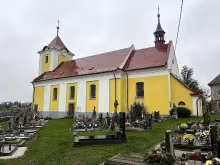
Kostel Nanebevzetí Panny Marie in Velká Jesenice is a Roman Catholic filial church with historical roots dating back to the mid-14th century. Initially built as a wooden structure, it was later reconstructed using stone and expanded in the early 19th century under Prince Rudolf von Colloredo-Mannsfeld's patronage. The church showcases Baroque architecture, featuring a single nave, a bell tower replacing an original wooden belfry, and a flat ceiling. It is encircled by an old cemetery that was enlarged in the mid-20th century.
The origins of Kostel Nanebevzetí Panny Marie trace back to around 1350 when it served as a filial church to Zvoli. In 1495, ownership rights were transferred from Zbyněk Průchovec to Mikuláš mladší Trčka z Lípy, marking an important administrative shift. During the Thirty Years' War, the church became a filial church to Nové Město nad Metují. In 1585, Vít Blatenský was noted as the priest of Velká Jesenice, indicating ongoing religious activity.
Architecturally, Kostel Nanebevzetí Panny Marie underwent significant transformations over time. The original wooden structure was replaced by a stone building at an unspecified date. Between 1827 and 1828, under Prince Rudolf von Colloredo-Mannsfeld's patronage, the church was extended with two new windows, and a bell tower replaced the former wooden belfry. These changes reflect the Baroque style of that era.
Ownership and administration have seen notable figures throughout its history. In 1495, Zbyněk Průchovec sold his rights to Mikuláš mladší Trčka z Lípy. Later, around 1689, Ludvík hrabě Colloredo-Mansfeld took over the parish and associated churches, further influencing its development.
Key events include its role as a filial church during different periods, such as to Zvoli around 1350 and Nové Město nad Metují during the Thirty Years' War. The renovation in 1827-1828 under Prince Rudolf von Colloredo-Mannsfeld was significant, expanding its structure.
Today, Kostel Nanebevzetí Panny Marie remains an active worship site with regular services every Sunday at 10:00 AM, except the last Sunday of each month. The church houses organ pipes from 1834 made by Ignác Josef Welzl, adding to its historical and cultural value. Surrounded by a cemetery expanded in the mid-20th century, it offers visitors insight into both religious history and local heritage.
Kostel Nanebevzetí Panny Marie stands as a testament to Bohemian history's rich tapestry, reflecting changes from its 14th-century origins through Baroque renovations. Its enduring presence invites exploration of its architectural beauty and historical significance within the Královéhradecký region.
Historical milestones
- 1350
- Served as a filial church to Zvoli.
- 1585
- Vít Blatenský was mentioned as the priest in Velká Jesenice.
- 1689
- Ludvík hrabě Colloredo-Mansfeld took over the parish and associated churches.
- 1827-1828
- The church was extended and renovated under Prince Rudolf von Colloredo-Mannsfeld.
Architectural development
The original wooden structure of the church was replaced by a stone building at an unknown date. In 1827-1828, it underwent significant renovations including extensions with two new windows and the addition of a bell tower in place of the former wooden belfry.
Historical events
Around 1350, it served as a filial church of Zvoli.
In 1585, Vít Blatenský was mentioned as the priest in Velká Jesenice.
During the Thirty Years' War, it became a filial church to Nové Město nad Metují.
From 1827-1828, the church was extended and renovated under Prince Rudolf von Colloredo-Mannsfeld.
Owners
In 1495, Zbyněk Průchovec sold his rights to Mikuláš mladší Trčka z Lípy. In approximately 1689, Ludvík hrabě Colloredo-Mansfeld took over the parish and associated churches.
Points of interest
- The church's transition from a wooden structure to stone remains undocumented in specific dates, shrouding the exact timeline of its architectural evolution in mystery.
- During the Thirty Years' War, Kostel Nanebevzetí Panny Marie served as a filial church to Nové Město nad Metují, highlighting its strategic religious importance amidst regional conflict and turmoil.
- The organ pipes housed within the church were crafted by Ignác Josef Welzl in 1834, reflecting the era's craftsmanship and adding an auditory dimension to the church's historical narrative.
Guide
Show guide text
Welcome to the historic site of Kostel Nanebevzetí Panny Marie in Velká Jesenice. As you stand here, take a moment to absorb the serene atmosphere surrounding this enduring Roman Catholic filial church. Its presence is both a testament to faith and history, inviting you on a journey through time.
The origins of this sacred place trace back to the mid-14th century when it first served as a wooden structure, fulfilling spiritual needs under the patronage of Zvoli. Over centuries, it evolved into the stone edifice before you today, though specific details of its architectural transformation remain shrouded in mystery. By 1585, Vít Blatenský was serving as the priest here, marking the church's growing significance within the community.
Fast forward to 1689, and we see Ludvík hrabě Colloredo-Mansfeld taking over the parish, a pivotal moment that would shape its future. The early 19th century witnessed another transformation under Prince Rudolf von Colloredo-Mannsfeld, who extended and renovated the church between 1827 and 1828. This era introduced Baroque architectural elements, now evident in its single nave and bell tower, adding layers of historical richness to your visit.
As you stand here, take a moment to admire these details—the craftsmanship, the way light plays through the windows, casting patterns on stone that have witnessed centuries pass by. While specific architects remain unknown, their vision continues to inspire awe and reflection.
This church is not just stones and mortar; it's a tapestry of stories and figures like Zbyněk Průchovec z Průchova and Mikuláš mladší Trčka z Lípy, whose lives intertwined with its history. During the tumultuous Thirty Years' War, Kostel Nanebevzetí Panny Marie served as a filial church to Nové Město nad Metují, highlighting its resilience and importance in times of strife.
One intriguing mystery that adds to its allure is the undocumented transition from wood to stone. This enigma invites you to ponder the hands that shaped it and the generations that have walked through its doors.
As we conclude this auditory journey, I invite you to explore further, to walk around and immerse yourself in the stories etched into every corner of Kostel Nanebevzetí Panny Marie. May your visit be enriching and filled with wonder, as you connect with history and heritage right here in Velká Jesenice. Thank you for joining me on this exploration, and I hope it inspires a deeper appreciation for the narratives that shape our world.
Tips for visitors
The best time to visit the Church of the Assumption of the Virgin Mary in Velká Jesenice is during late spring or early autumn when the weather is mild, allowing you to comfortably explore both the church and its surrounding natural landscapes. These seasons offer pleasant temperatures for walking around the old cemetery and enjoying the typical Královéhradecký region scenery without the summer crowds or winter chill.
Parking and transportation options are available for visitors coming by car or public transport. For those driving, there are parking spaces nearby where you can leave your vehicle safely. If you prefer to use public transport, it is accessible from nearby towns; however, it's advisable to check the latest routes and schedules in advance using a travel planner or local transportation website.
When planning your visit, consider bringing comfortable walking shoes as there are several paths around the church and cemetery that might involve some uneven terrain. Additionally, carrying a camera or smartphone with a good camera is recommended for capturing the architectural beauty of the church and the serene landscapes of its surroundings. Don't forget to bring water and perhaps a light snack if you plan on spending more time exploring.
Photography enthusiasts will find several spots around the church ideal for capturing stunning images, especially during the golden hours of sunrise or sunset when the natural light enhances the textures and colors of the historic structure and its environment. The old cemetery also offers unique backdrops with its mature trees and varied tombstones that can add depth to your photographs.
For families visiting with children, there are several activities to keep them engaged while exploring the area. The natural landscapes around the church provide a great opportunity for a leisurely walk or even a small adventure game, searching for specific plants or birds typical of the region. Additionally, the historical aspect of the church can be made interesting through storytelling about its past and significance in the local community.
Businesses nearby
Do you run a restaurant, accommodation, shop, museum, rental, wellness or other visitor service near this monument? Show yourself directly to the people heading to it — this is how they will see you in the app and on the web:
Nearby
The church is surrounded by an old cemetery expanded in the mid-20th century. The area features natural landscapes typical of the Královéhradecký region.
Accommodation nearby
Themed route
Tematická výletní trasa: Kostel Nanebevzetí Panny Marie (Velká Jesenice)
1. Kostel Nanebevzetí Panny Marie - *Typ:* Historický kostel - *Proč stojí za návštěvu:* Tento barokní kostel, postavený v 18. století, je centrem duchovního života obce Velká Jesenice. Jeho architektura a bohaté interiéry nabízejí pohled na historii a uměleckou hodnotu regionu Královéhradecký kraj.
2. Starobylý hřbitov - *Typ:* Historický hřbitov - *Proč stojí za návštěvu:* Rozkládající se kolem kostela, tento hřbitov byl rozšířen v polovině 20. století a nabízí klidné chvíle pro reflektaci mezi starobylými náhrobními kameny. Je to místo plné historie, které připomíná minulost obce.
3. Přírodní krajinářství okolních lesů - *Typ:* Přírodní prostor - *Proč stojí za návštěvu:* Lesy kolem Velké Jesenice jsou typickými příklady královéhradeckých krajinných vlastností. Jsou ideálním místem pro procházky a pozorování divoké flóry a fauny, což nabízí útěk do klidu a přírody.
4. Kostelní věž - *Typ:* Architektonický prvek - *Proč stojí za návštěvu:* Věž kostela nabízí jedinečnou perspektivu na okolní krajinu. Je to místo, kde si můžete užít pohled z výše a pochopit architektonické detaily kostela z jiného úhlu.
Tato trasa nabízí kombinaci historie, duchovnosti a přírody, což umožňuje návštěvníkům prozkoumat bohatství obce Velká Jesenice.
Seasonal recommendations
Spring: Visiting the Church of the Assumption of the Blessed Virgin Mary during spring offers a unique experience as nature awakens around Velká Jesenice. The surrounding landscape is adorned with blooming flowers and lush greenery, creating a picturesque setting for photography enthusiasts. The gentle warmth of the season makes it an ideal time to explore the church's intricate architecture without the discomfort of extreme temperatures. However, this period can attract more visitors due to the pleasant weather, so arriving early in the morning might help avoid larger crowds. Light layers are recommended as temperatures can vary throughout the day.
Summer: The summer months bring vibrant life and activity to Velká Jesenice, making it a popular time for tourists to visit the Church of the Assumption of the Blessed Virgin Mary. Long daylight hours allow ample time to explore both the church's interior and its beautiful surroundings. However, this is also when visitor numbers peak, so planning your visit early in the day can help you avoid crowds. Dressing comfortably in breathable fabrics is advisable due to the warm weather, and carrying water with you will keep you hydrated as you enjoy the sunny days.
Autumn: Autumn offers a serene atmosphere for visiting the Church of the Assumption of the Blessed Virgin Mary, as Velká Jesenice transforms into a tapestry of reds, oranges, and yellows. The cooler temperatures make it comfortable to stroll around the church grounds and appreciate the changing foliage. This season is generally less crowded than summer, providing a more tranquil experience. Wearing layers is recommended, as mornings can be chilly while afternoons remain mild. It’s also a good idea to check if there are any local events or markets that coincide with your visit for an enriched cultural experience.
Winter: The winter months envelop the Church of the Assumption of the Blessed Virgin Mary in a quiet and mystical atmosphere, especially when snow blankets Velká Jesenice. This season offers a unique charm as the church stands against the backdrop of a snowy landscape, creating a magical setting that is perfect for photography or simply enjoying the tranquility. However, be prepared for shorter opening hours and potentially challenging weather conditions; dressing warmly in layers and wearing waterproof footwear is essential. Planning your visit during weekdays can help you avoid any potential holiday crowds, ensuring a peaceful exploration of this historic site.
Visualizations and artistic views

Vizualizace jsou generovány umělou inteligencí a slouží jako inspirace.


Tips from visitors
No tips yet. Be the first!
Log in and add your tip.
Location on the map




Příběhy a pověsti
Legendy, pověsti a příběhy spjaté s touto památkou
Reviews and comments