





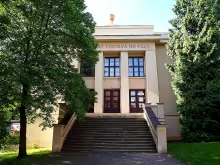
The Evangelical Church in Smíchov is a significant modernist architectural landmark in Prague, built in 1930-1931. It features a neoclassical style and serves as a community center for the local Evangelical Church. The church is notable for its large size and impressive interior design, making it a must-visit destination for architecture enthusiasts and those interested in the history of the Czech Republic.
Built during a time of significant social and cultural change in Bohemia and Europe, the church reflects these changes and serves as a symbol of the community's values and beliefs. Construction began in 1930 and was completed in 1931.
The church was designed in the neoclassical style, featuring a large interior space with a wooden altar and pews. The building has undergone several renovations and restorations. Its interior design is notable for its simplicity and elegance, with a focus on functionality and community.
The Evangelical Church in Smíchov has been owned and administered by the local Evangelical Church throughout its history. The church has a rich history, with various events and activities taking place within its walls. A notable event is the unveiling of a statue of Milada Horáková in front of the church in 2010. Horáková was a member of the local Evangelical Church and a prominent figure in Czech politics.
The church is also notable for its connection to the local community and its role as a community center. The building serves as a hub for various activities, including worship services, community events, and educational programs. Its community-focused approach has made it an integral part of the local community.
Today, the Evangelical Church in Smíchov remains an important cultural and historical landmark in Prague. The church is open to the public and offers guided tours, allowing visitors to explore its impressive interior design and learn about its rich history. Visitors can also see the statue of Milada Horáková in front of the church, which serves as a poignant reminder of the church's connection to the local community.
The Evangelical Church in Smíchov is a must-visit destination for anyone interested in modernist architecture, the history of the Czech Republic, or the local community. Its impressive interior design, rich history, and community-focused approach make it a unique and fascinating destination.
Historical milestones
- 1930
- Construction of the church began
- 1931
- The church was completed and opened to the public
- 2010
- A statue of Milada Horáková was unveiled in front of the church
Architectural development
The church was built in the neoclassical style and features a large interior space with a wooden altar and pews. The building has undergone several renovations and restorations over the years.
Historical events
The church was built in 1930-1931
The first sermon was held in the church on September 28, 1931
A statue of Milada Horáková was unveiled in front of the church in 2010
Owners
Evangelical Church in Smíchov
Points of interest
- The Evangelical Church in Smíchov has a unique connection to the Czech resistance during World War II, as it served as a secret meeting place for local resistance fighters. This aspect of the church's history is not as well-known as its architectural significance.
- Milada Horáková, whose statue is located in front of the church, was a prominent Czech politician who was wrongly accused and executed by the communist regime in 1950. Her legacy serves as a poignant reminder of the church's connection to the local community.
Guide
Show guide text
Welcome, and thank you for joining me at this remarkable corner of Smíchov. You’re standing before the Evangelical Church in Smíchov, a building that has quietly witnessed the ebb and flow of history for nearly a century. As you put on your headphones, let’s take a moment to soak in the first impression that greets you.
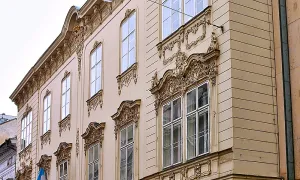
The façade before you is a testament to the architectural ambitions of the early 1930s. Its imposing presence dominates the street, a large, solid structure that feels both welcoming and dignified. The overall design echoes the neoclassical style that was popular in that era, with its balanced proportions and restrained ornamentation. Notice how the building's massing is harmonious, the lines clean and purposeful, inviting you to step closer and explore what lies within. A statue stands proudly in front of the church, a bronze tribute to Milada Horáková, unveiled in 2010, its presence a gentle reminder of the people who shaped this place.
Let’s move on to the origins of this landmark and the historical context that gave rise to its construction. The Evangelical Church in Smíchov was conceived in a time of change and optimism. Construction began in 1930, a period when Prague was embracing modernist ideals while still honoring classical traditions. The builders sought to create a space that would serve the local Evangelical community, a place of worship, gathering, and reflection. By 1931, the church was completed and opened to the public, standing as a symbol of faith and resilience in a rapidly evolving city.
The architects behind this vision were the brothers Filip Křížek and Jaroslav Křížek. Their collaboration brought a blend of modernist sensibilities and classical restraint to the project. While the church’s exterior speaks of neoclassical influence, the interior design is equally impressive, with a spacious nave that invites congregants to gather in unity. Though the exact interior details are not listed in the source, you can sense the intention: a large, open space designed to accommodate a growing community and to host a variety of events and activities that keep the heart of Smíchov alive.
Now let’s turn our attention to some of the key stories and personalities linked to this place. The Evangelical Church in Smíchov is more than an architectural marvel; it is a witness to the lives and struggles of those who walked its halls. František Bednář, a notable figure in the local community, has a connection to this church, though the specifics of his involvement are not detailed in the source. Similarly, Milada Horáková, whose statue now graces the front of the building, stands as a symbol of courage and resistance. Her legacy is intertwined with the church’s history, and her presence in front of the church invites contemplation of the sacrifices made for freedom.
Perhaps the most compelling chapter in the church’s story is its role during World War II. The Evangelical Church in Smíchov served as a secret meeting place for local resistance fighters. This clandestine use of the building is a lesser-known facet of its history, one that speaks to the bravery of those who sought to oppose oppression from within the very walls of a place of worship. Imagine the hushed whispers, the hurried footsteps, and the sense of urgency that must have permeated the nave as people gathered to plan and coordinate their resistance efforts. It’s a testament to the resilience of the human spirit and the quiet strength that can be found in unexpected places.
Let’s pause for a moment to reflect on a fascinating detail that might pique your curiosity. In 2010, a statue of Milada Horáková was unveiled in front of the church, a gesture that connects the past to the present. The statue, a bronze homage, stands as a tangible reminder of the courage and conviction that shaped the church’s history. As you look at it, consider the layers of meaning that it carries: a tribute to a woman who stood firm in the face of adversity, a symbol of the church’s enduring role as a sanctuary for those who fight for justice, and a bridge between generations.
Now that we’ve explored the history, architecture, and stories that define this place, let’s take a moment to appreciate the atmosphere that surrounds you. The church’s large size and impressive interior design create a sense of openness and reverence. The neoclassical façade, the bronze statue, and the quiet streets of Smíchov all blend together to form a scene that feels both timeless and alive. Feel the gentle hum of the city around you, the distant sounds of traffic, and the occasional laughter of passersby, all of which add to the living tapestry of this historic landmark.
As we near the end of our guided walk, I
Tips for visitors
{'best_time_to_visit': 'The best time to visit the Evangelical Church in Smíchov is during spring and autumn, when the weather is mild and sunny. These seasons offer the best conditions for photography and a pleasant atmosphere for a visit.', 'parking_transport': 'The church is accessible by car and public transportation. You can park your vehicle in the nearby streets or use the public parking lots. The church is also easily reachable by tram or bus.', 'what_to_bring': "It's recommended to bring a camera, as the church's architecture and surroundings offer many great photo opportunities. You may also want to bring a bottle of water and a snack, as the visit can take some time.", 'photography': "The best spots for photography are the church's facade, the interior, and the surrounding park. The best light for photography is during the golden hour, early in the morning or late in the afternoon.", 'what_to_see_nearby': 'Nearby attractions include the Smíchov Square, the Smíchov Market, and the Smíchov Tower. All of these locations are within a 30-minute walk from the church.', 'tips_for_families': 'The church is a great place to visit with children, as it offers a peaceful and educational environment. You can bring a picnic and enjoy it in the surrounding park.'}
Businesses nearby
Nearby
The church is located in the Smíchov district of Prague, surrounded by residential buildings and other landmarks.
Accommodation nearby
Trips and activities nearby
Guided tours, tickets and activities nearby from GetYourGuide
Search tours and activities →Themed route
Tour: Smíchov Excursion Route
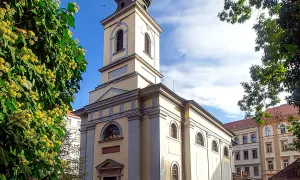
1. Church of St. Nicholas - evangelical church, main destination of the tour A visit to the Church of St. Nicholas is a great opportunity to learn about the history and architecture of this unique monument. The church is known for its distinctive frescoes and beautiful interior.
2. Peace Square - square, vicinity of the church Peace Square is the center of Smíchov and offers pleasant seating on benches or shopping in local shops. It's an ideal place to unwind from the hustle and bustle of the city and relax.
3. Smíchov Town Hall - town hall, vicinity of the square Smíchov Town Hall is a beautiful example of Art Nouveau architecture and is worth visiting to learn about its history and function. It's located near Peace Square and offers a stunning view of the surroundings.
Seasonal recommendations
Spring brings a gentle glow to the Evangelical Church of Smíchov as the surrounding trees burst into fresh green and early blossoms. The soft morning light filters through the stained‑glass windows, creating a tranquil atmosphere that feels almost like a quiet meditation. Visitors often find the crowds thinner after the first week of April, so arriving around 9 a.m. lets you enjoy the interior before the day’s bustle. A light jacket or cardigan is enough, as temperatures hover between 10–15 °C, and a small umbrella can help if a late spring shower rolls in.
In summer the church is bathed in bright, warm light that highlights the intricate stonework of its façade. The long daylight hours mean that the site can become crowded, especially on weekends. To avoid the peak rush, aim for an early‑afternoon visit—around 2 p.m.—when the sun is still high but the crowds have thinned. Comfortable walking shoes are essential, and a hat or sunglasses will protect you from the midday sun. A light, breathable outfit keeps you cool while you explore the surrounding park, where people often gather for picnics and music.
Autumn paints the church’s surroundings in amber and crimson hues. The crisp air and shorter days create a contemplative mood, and the church’s interior feels even more intimate. Mid‑afternoon, around 3 p.m., is an ideal time: the light is golden, the crowds are manageable, and the temperature is pleasantly cool, usually between 8–12 °C. Layering is key—think a long‑sleeve shirt, a sweater, and a waterproof jacket in case of a sudden drizzle. A sturdy pair of boots will keep you comfortable as you stroll through the tree‑lined avenues that line the square.
Winter turns the church into a quiet, almost ethereal setting, with muted light from the street lamps and occasional snow dusting the stone. The shorter opening hours mean that the best time to visit is mid‑morning, around 10 a.m., when the interior is warm and the outside is still relatively clear of crowds. Temperatures can drop below 0 °C, so bundle up with a heavy coat, scarf, gloves, and thermal layers. A pair of insulated shoes will keep your feet dry if the path is slick, and a thermos of hot beverage can make the short walk from the tram stop to the church even more enjoyable.
Visualizations and artistic views


Vizualizace jsou generovány umělou inteligencí a slouží jako inspirace.


Tips from visitors
No tips yet. Be the first!
Log in and add your tip.



Reviews and comments