




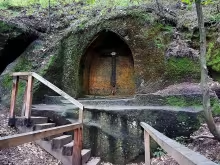
Důl Max is a historical monument located in the Libušín district of Středočeský kraj, Czech Republic. Established between 1890 and 1892, this former coal mine was named after Max Egon Fürtenberg, a member of the board of directors of Pražská železářská společnost. The site played a significant role in the region's industrial history until its closure in 1980. Today, it is notable for its machinery hall, which has been protected as a cultural monument since 2002.
The origins of Důl Max date back to the late 19th century when Bohemia experienced rapid industrial growth within the Austro-Hungarian Empire. The mine's establishment coincided with significant coal mining developments across Central Europe, contributing to regional economic expansion. Initially owned by Pražská železářská společnost, Důl Max underwent several name changes reflecting political shifts: President Beneš, Fierlinger II, and Gottwald I.
Architecturally, Důl Max featured two counter-rotated shaft towers designed for mining operations. Initially powered by steam engines from Breitfeld, Daněk, and Škodovy strojírny, the mine transitioned to electric power in the late 1930s. This shift necessitated new machinery halls with steel structures to accommodate electrical mining equipment.
Ownership of Důl Max changed hands several times, reflecting broader political and economic transformations. Initially under Pražská železářská společnost, it later adopted names that mirrored the prevailing political climate: President Beneš during the post-World War II era, Fierlinger II in the early Cold War period, and Gottwald I after World War II, named for Klement Gottwald. Specific ownership details following its closure in 1980 are not documented.
Key events at Důl Max include its operational years from 1892 until 1980. In 1933, deepening operations extended the mine's depth by an additional 100 meters. By the late 1970s, coal processing facilities were relocated to Důl Schöller, and in 1973, the haulage system was dismantled. The final closure of mining activities occurred in 1980, with the demolition of its mining towers completed on June 17, 1989.
Today, Důl Max stands as a testament to the industrial heritage of the region. Located south of Libušín near the Kladensko-nučická railway, it has been repurposed for storage by the Directorate of Railways since its closure. Visitors can explore the preserved machinery hall, which offers a glimpse into the technological advancements that once powered this significant industrial site.
Důl Max is not only an important historical monument but also a cultural landmark reflecting the industrial evolution of Central Europe. Its preservation as a cultural monument underscores its significance in understanding the region's past. Visitors are invited to explore this remarkable site, where history and industry converge, offering insights into a bygone era of coal mining and technological progress.
Historical milestones
- 1890
- Establishment of Důl Max began.
- 1892
- Důl Max officially opened for operations.
- 1933
- Deepening operations extended mine depth by 100 meters.
- 1973
- Haulage system at Důl Max was dismantled.
- 1980
- Closure of mining activities at Důl Max.
- 2002
- Machinery hall protected as a cultural monument.
Architectural development
Důl Max featured two counter-rotated shaft towers for mining operations. Initially powered by steam engines from Breitfeld, Daněk and Škodovy strojírny, the mine transitioned to electric power in the late 1930s with new machinery halls constructed for this purpose.
Historical events
The mine was operational from its establishment in 1892 until its closure in 1980.
In 1933, the mine began deepening operations to an additional 100 meters.
By the late 1970s, coal processing facilities were relocated to Důl Schöller.
Owners
Initially owned by Pražská železářská společnost, the mine underwent several name changes reflecting political shifts: President Beneš, Fierlinger II, and Gottwald I. Specific ownership details post-1980 are not documented.
Points of interest
– The name changes of Důl Max reflect the political climate of its time, transitioning from President Beneš to Fierlinger II and Gottwald I, each named after influential Czechoslovak leaders.
– Originally powered by steam engines from notable manufacturers like Breitfeld, Daněk, and Škodovy strojírny, Důl Max transitioned to electric power in the late 1930s, showcasing an early adoption of technological advancements in mining operations.
Guide
Show guide text
Welcome to the historic site of Důl Max, nestled in the Libušín district of Středočeský kraj. As you stand before this remarkable former coal mine, take a moment to absorb the aura of an era long past. The machinery hall, now protected as a cultural monument, stands as a testament to the industrial might that once thrived here.
Důl Max began its journey between 1890 and 1892, established by Pražská železářská společnost. Named after Max Egon Fürtenberg, a prominent figure on their board of directors, this mine was more than just a source of coal; it was a cornerstone in the region's industrial narrative. Over its operational years until 1980, Důl Max witnessed significant changes, not only in technology but also in political tides that swept through Czechoslovakia.
As you explore, take note of the architectural resilience around you. The machinery hall, with its robust structure, speaks volumes about the engineering prowess of its time. While specific architects remain unknown, the enduring nature of this space invites admiration and curiosity.
The history of Důl Max is intertwined with key figures like Max Egon Fürtenberg, whose influence extended beyond business into cultural realms. The mine's evolution also mirrors the political shifts in Czechoslovakia, reflected in its changing names—from President Beneš to Fierlinger II and Gottwald I—each echoing a different era.
One fascinating aspect of Důl Max is its original power source: steam engines from renowned manufacturers like Breitfeld, Daněk, and Škodovy strojír. These machines were the heartbeat of the mine, driving operations deep into the earth, with extensions reaching an additional 100 meters by 1933.
As you continue your exploration, let the layers of history unfold around you. Consider the stories etched in every corner and the silent echoes of miners who once worked here. This site is not just a relic but a narrative waiting to be discovered.
We invite you to delve deeper into this captivating place, where each step reveals another chapter of its storied past. Thank you for joining us on this journey through time at Důl Max.
Tips for visitors
The best time to visit Důl Max is during the late spring or early autumn months, when the weather is mild and pleasant for exploring outdoor sites. The area's industrial heritage can be appreciated without the discomfort of summer heat or winter cold. Additionally, visiting outside peak tourist seasons may offer a quieter experience, allowing you to explore the site more thoroughly.
Parking near Důl Max is available in the vicinity south of Libušín, with several spots accessible for visitors driving to the site. For those preferring public transport, the Kladensko-nučická railway line provides convenient access to nearby areas. It's advisable to check current schedules and routes via a transportation app or website to plan your journey effectively.
When visiting Důl Max, it’s recommended to bring comfortable walking shoes as there may be uneven terrain around the site. A hat and sunscreen are also advisable for protection against the sun during sunny days. Don’t forget water and snacks, especially if you plan on spending several hours exploring the area.
For photography enthusiasts, early morning or late afternoon offers the best natural light to capture the industrial structures of Důl Max with dramatic shadows and highlights. The site's repurposed storage facilities provide unique architectural details that can be interesting subjects for photos. Always respect any signage regarding restricted areas when taking photographs.
In the vicinity of Důl Max, within a 30-minute drive or public transport journey, visitors can explore the historical town of Libušín and its surrounding natural landscapes. The area offers scenic walking trails suitable for families with children, where they can enjoy fresh air and learn about local flora and fauna.
Families visiting Důl Max should consider bringing along a picnic lunch to enjoy in the nearby open spaces. While exploring the site, keep an eye out for informational plaques that provide historical context about the former coal mine, making it both educational and engaging for children.
Businesses nearby
Do you run a restaurant, accommodation, shop, museum, rental, wellness or other visitor service near this monument? Show yourself directly to the people heading to it — this is how they will see you in the app and on the web:
Nearby
Located south of Libušín near the Kladensko-nučická railway, the area around Důl Max is characterized by its industrial heritage. The site has been repurposed for storage by the ředitelství spojů since the mine's closure.
Accommodation nearby
Trips and activities nearby
Guided tours, tickets and activities nearby from GetYourGuide
Search tours and activities →Themed route
Tematická výletní trasa: Důl Max a jeho okolí
1. Důl Max - Typ: Historické místo, bývalá hornická lokalita - Proč stojí za návštěvu: Návštěva Důlu Max nabídne pohled na historii průmyslové éry v regionu. Po uzavření doly byl objekt přeměněn na úložiště ředitelstvím spojů, což z něj činí zajímavý příklad adaptace průmyslových struktur pro moderní použití. Navštívte místo a uviděte, jak se historie a současnost prolínají.
2. Kladensko-nučická železnice - Typ: Historický železniční trať - Proč stojí za návštěvu: Tato železnice, která se nachází poblíž Důlu Max, je důležitou součástí regionální infrastruktury. Její historie a význam pro přepravu surovin z hornických oblastí do jiných částí Čech nabízejí zajímavé poznatky o průmyslovém rozvoji regionu. Prozkoumejte její trasy a uviděte, jak daleko se železniční doprava vyvinula.
3. Okolní úložiště ředitelstvím spojů - Typ: Moderní infrastruktura - Proč stojí za návštěvu: Po uzavření Důlu Max byly části objektu převedeny na úložiště ředitelstvím spojů. Tato transformace ilustruje, jak se průmyslové lokality mohou přizpůsobit novým potřebám a zůstat funkčními součástmi regionální infrastruktury. Navštívte místo a uviděte, jak moderní logistika využívá historické struktury.
Tato trasa nabídne pohled na průmyslovou minulost i současnost okresu Libušín a ukáže, jak se místní komunita přizpůsobuje změnám.
Seasonal recommendations
Spring: Visiting Důl Max during spring offers a unique experience as the area begins to awaken from winter's slumber. The early blooms and fresh greenery create an enchanting atmosphere, with natural light filtering through the trees, highlighting the historical structures in new ways. This season is ideal for those who appreciate nature's subtle transitions. Visitors should consider wearing layers, as temperatures can vary between cool mornings and warmer afternoons. Early visits are recommended to enjoy a quieter experience before peak tourist seasons begin.
Summer: Summer at Důl Max is characterized by vibrant light and long days, perfect for exploring the site in full daylight. The lush surroundings provide a picturesque backdrop, enhancing the historical ambiance of the mine. This season attracts more visitors, so it's wise to arrive early to avoid crowds. Comfortable walking shoes and breathable clothing are essential due to warmer temperatures. Don't forget sunscreen and water to stay hydrated while enjoying outdoor activities.
Autumn: Autumn at Důl Max is a feast for the senses with its rich tapestry of colors as leaves turn golden and red, creating a stunning contrast against the historical architecture. The cooler weather makes it an ideal time for extended exploration without the summer heat. Visitors should dress in layers to accommodate fluctuating temperatures throughout the day. This season offers a more tranquil experience compared to summer, allowing for a leisurely visit amidst nature's vibrant display.
Winter: Winter transforms Důl Max into a serene and mystical landscape, with snow-covered paths adding an ethereal quality to the historical site. The reduced daylight hours mean shorter visiting times, so planning your trip is crucial. Warm clothing, including hats and gloves, is essential to stay comfortable in the cold. While some areas might be less accessible due to snow, the quiet atmosphere provides a unique opportunity for reflection and appreciation of the mine's history amidst winter's beauty.
Visualizations and artistic views

Vizualizace jsou generovány umělou inteligencí a slouží jako inspirace.

Tips from visitors
No tips yet. Be the first!
Log in and add your tip.



Reviews and comments