




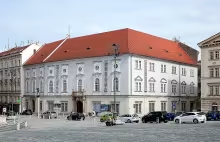
The Reduta Theatre in Brno is Europe's oldest surviving theatre building, dating back to 1608. Situated on Zelný trh, this historic venue is part of the National Theatre in Brno and holds a unique place in Central European cultural history. Its significance is highlighted by events such as performances by Wolfgang Amadeus Mozart and his sister Nannerl in 1767.
The Reduta's journey began in the early 17th century when the city council of Brno acquired and remodeled medieval houses on Zelný trh. The Liechtenstein house was transformed into a tavern with assembly rooms for ceremonies by 1605. By 1634, another house had been integrated, creating a venue for occasional performances by traveling theatrical companies. In the 1730s, it expanded to include a new theater and ballroom. Known as the Taverna Theatre during the 18th century, it hosted mainly German and Italian plays.
The Reduta's architectural evolution reflects its resilience through adversity. After fires in 1785 and 1786, the city council rebuilt the theatre in the neoclassical style with a new two-story main hall. However, another devastating fire in 1870 led to its closure, repurposing it as a market hall until 1918 when theatrical activities resumed following the establishment of Czechoslovakia. The building underwent further redesigns in the 1950s by architects Bohuslav and Kamil Fuchs, adapting it for bilingual performances.
Ownership of the Reduta has remained with the city of Brno since its acquisition around 1600. Over time, it became part of the National Theatre in Brno, reflecting its enduring cultural significance. The theatre's history is marked by notable events, including Emperor Leopold II's visit in 1791 and performances during Emperor Francis I's visits in 1804 and 1808.
One of Reduta's most intriguing historical moments occurred on December 30, 1767, when young Wolfgang Amadeus Mozart performed with his sister Nannerl. Despite challenges with the orchestra's trumpets, Vice-Kapellmeister Leopold Mozart was satisfied with their performance. This event highlights the theatre's role in fostering musical talent and cultural exchange.
Today, Reduta Theatre is a vibrant part of Brno's cultural landscape. Following its comprehensive restoration completed in 2005, it hosts various artists and ensembles from the Czech Republic and Slovakia for guest performances. The theatre does not have a permanent ensemble but regularly invites diverse productions, making it a dynamic venue for contemporary audiences.
Visitors to Reduta Theatre can appreciate its rich history and architectural beauty while enjoying modern performances that bridge past and present. Its location on Zelný trh places it amidst Brno's historical architecture and cultural landmarks, enhancing its appeal as a must-visit destination for those interested in theatre and European heritage.
Historical milestones
- 1608
- First mention of Brněnská Reduta as a theatre venue.
- 1733
- Construction of the first dedicated theatre building with lóžové seating.
- 1791
- Hosting events during Emperor Leopold II's visit.
- 1804 and 1808
- Events held in honor of Emperor Francis I's visits.
Architectural development
Initially serving as an inn, the Reduta underwent significant transformations to become a theatre. The original structure faced several fires, leading to reconstructions that included dance halls and modernized facilities by the late 19th century. Post-1918 renovations adapted it for bilingual performances, culminating in a comprehensive restoration completed in 2005.
Historical events
First mentioned as a theatre venue in 1608.
A dedicated theatre building with lóžové seating was constructed in 1733.
Reconstruction completed and reopened in 2005 after being closed for safety reasons.
Owners
The city of Brno acquired the deteriorating Lichtenštejnský palác around 1600. Over time, it became part of the National Theatre in Brno.
Points of interest
- The Reduta Theatre's transformation into a tavern with assembly rooms by 1605 was an innovative adaptation of medieval houses for social and ceremonial purposes, reflecting early modern urban development in Brno.
- Despite multiple devastating fires throughout its history, the theatre's resilience is exemplified by its architectural evolution from Baroque to neoclassical style, showcasing adaptive reuse and historical preservation efforts over centuries.
Guide
Show guide text
Welcome to the historic Reduta Theatre in Brno's Zelný trh! As you stand before this architectural gem, take a moment to absorb its grandeur and imagine the centuries of stories it holds within its walls.
The Reduta Theatre is not just any theatre; it is Europe's oldest surviving theatre building. Its history traces back to 1608 when it was first mentioned as a venue for performances in Brno. Originally part of a dilapidated Lichtenštejnský palác, the site underwent an innovative transformation into a tavern with assembly rooms by 1605. This adaptation reflects early modern urban development in Brno and set the stage for its future prominence.
As you gaze upon the building, notice how it has evolved over time. The first dedicated theatre structure was constructed here in 1733, featuring lóžové seating that added a touch of elegance to performances. Despite suffering from multiple devastating fires throughout its history, the Reduta Theatre's resilience is evident in its enduring presence.
This venue has been graced by many notable figures and events. In 1791, it hosted gatherings during Emperor Leopold II's visit. Later, in 1804 and 1808, it was the site of celebrations honoring Emperor Francis I. The Reduta Theatre has also witnessed visits from historical personalities such as Arcivévoda Matyáš in 1608, Polish King Jan III. Sobieský in 1683, and Hrabě Thurn in 1675.
One fascinating aspect of the Reduta Theatre is its transformation over the centuries. Initially serving as an inn for distinguished guests, including European nobility, it evolved into a cultural hub that has continually adapted to meet the needs of its time.
As you continue your exploration, take a moment to reflect on the theatre's journey from a medieval tavern to a cherished national treasure. The Reduta Theatre is more than just a building; it is a living testament to Brno's rich cultural heritage and enduring spirit.
We invite you to delve deeper into this remarkable site, discovering its stories and secrets. Thank you for joining us on this journey through history at the Reduta Theatre. Enjoy your visit!
Tips for visitors
The best time to visit Divadlo Reduta is during the late spring or early autumn months, when the weather is pleasant for exploring Brno's historic Zelný trh area without the summer crowds. This period also aligns with many cultural events hosted by the National Theatre complex, offering a richer experience of the theatre’s vibrant history and current performances.
Parking near Divadlo Reduta can be challenging due to its central location in Brno. Visitors are encouraged to use public transportation or park in designated areas outside the immediate vicinity of Zelný trh and walk from there. The area is well-served by tram lines, making it accessible for those traveling without a car.
When visiting Divadlo Reduta, consider bringing comfortable walking shoes as you'll likely explore more than just the theatre itself. A camera or smartphone with a good camera can capture the unique architecture of the building and its surroundings on Zelný trh. Additionally, carrying a light jacket is advisable since indoor areas might be cooler.
For photography enthusiasts, early morning visits are recommended to avoid crowds and benefit from softer natural lighting. The façade of Divadlo Reduta offers a stunning backdrop for photos, especially when the sun illuminates its architectural details. Inside, capturing the ornate interior during guided tours can provide unique perspectives.
Within 30 minutes' walking distance from Divadlo Reduta, visitors can explore other parts of the National Theatre complex and enjoy Brno's rich cultural scene. The area is also a good starting point for families with children to discover nearby attractions that offer interactive experiences or educational insights into the region’s history.
Businesses nearby
Do you run a restaurant, accommodation, shop, museum, rental, wellness or other visitor service near this monument? Show yourself directly to the people heading to it — this is how they will see you in the app and on the web:
Events nearby


Event source: Kudy z nudy and open data of the Czech Republic
Nearby
Situated on Zelný trh in Brno, the area is rich in historical architecture and cultural landmarks. The proximity to other parts of the National Theatre complex adds to its significance.
Accommodation nearby
Trips and activities nearby
Guided tours, tickets and activities nearby from GetYourGuide
Search tours and activities →Themed route
Tematická výletní trať: Historické a kulturní srdce Brna
1. Divadlo Reduta (budova divadla) *Typ:* Kulturní památka *Proč stojí za návštěvu:* Divadlo Reduta je klíčovou součástí Národního divadelního komplexu v Brně a slavné pro své bohaté historické pozadí. Zajímavostí jsou jeho impresivní interiér a architektonický styl, který odráží ducha 19. století. Navštívte toto místo pro pochopení kulturního vlivu divadla na město Brno.
2. Zelný trh *Typ:* Historické náměstí *Proč stojí za návštěvu:* Zelný trh je nejstarším obchodním centrem v Brně, známý svou historií a architekturou. Své jméno získal díky tradičnímu prodeji zelí a dalších potravin. Procházka po náměstí nabídne pohled na klasické obchody, restaurace a historické budovy, které dodávají místu jedinečný charakter.
3. Národní divadlo *Typ:* Divadelní instituce *Proč stojí za návštěvu:* Nachází se v blízkosti Divadla Reduta a je součástí stejnojmenného komplexu. Národní divadlo je známé svými klasickými i moderními inscenacemi, které přitahují diváky z celé Evropy. Navštívte toto místo pro pochopení jeho významu v kulturním životě Brna.
4. Kostel svatého Jakuba *Typ:* Historický kostel *Proč stojí za návštěvu:* Tento barokní kostel je jednou z ikonických památek na Zelném trhu a slavný pro svůj výrazný bleskový chrám. Jeho historie sahá do 14. století, což přidává hluboké kulturní vrstvy k místnímu prostředí. Návštěva tohoto kostela nabídne pohled na jeho bohatou architekturu a historii.
5. Kostel svatého Petra a Pavla *Typ:* Historický kostel *Proč stojí za návštěvu:* Nachází se nedaleko Zelného trhu a je známý svou barokní architekturou. Kostel byl postaven v 17. století a sloužil jako klidný útočiště pro místní obyvatele. Jeho interiér, zejména fresky a sochy, jsou přitažlivé pro milovníky umění a historie.
Tato trasa vás provede skrze kulturní srdce Brna, nabízejíc pohled na jeho bohatou historii a architekturu.
Seasonal recommendations
Spring: Visiting Reduta Theatre during spring offers a unique experience as the surrounding gardens begin to bloom, creating a picturesque setting that enhances the historic charm of the building. The gentle warmth and longer daylight hours provide an inviting atmosphere for exploring both the architecture and nearby nature trails. It's advisable to wear layers, as temperatures can fluctuate between mild days and cooler evenings. Spring is generally less crowded than summer, making it an ideal time to enjoy a leisurely visit without long waits.
Summer: The summer season at Reduta Theatre is vibrant with lush greenery enveloping the historic site, offering a lively backdrop for any outdoor events or performances. With longer daylight hours, visitors can take advantage of extended opening times and perhaps catch an evening show under the stars. Summer attracts more tourists; therefore, it's wise to arrive early to avoid crowds and ensure entry into popular shows. Comfortable clothing suitable for warm weather is recommended, along with staying hydrated during your visit.
Autumn: Autumn brings a stunning display of colors as the leaves around Reduta Theatre turn vibrant shades of red, orange, and gold, creating an enchanting atmosphere perfect for photography enthusiasts or those seeking a tranquil escape. This season often sees fewer visitors compared to summer, providing a more relaxed experience. The cooler temperatures make it ideal for wearing layers that can be adjusted throughout the day. It's also a great time to enjoy seasonal events or performances that take advantage of the crisp autumn air.
Winter: Winter at Reduta Theatre transforms the area into a serene winter wonderland, with snow often blanketing the historic site and surrounding gardens, offering a magical setting for visitors. The shorter days mean earlier closures, so planning your visit during daylight hours is advisable. Due to colder temperatures, dressing warmly in layers is essential, including hats, gloves, and insulated footwear. Winter can be less crowded than other seasons, allowing for a more intimate exploration of the theatre's rich history without the hustle and bustle.
Visualizations and artistic views


Vizualizace jsou generovány umělou inteligencí a slouží jako inspirace.


Tips from visitors
No tips yet. Be the first!
Log in and add your tip.


Reviews and comments