





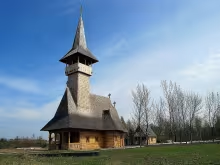
The Church of Saint Valentine in Most is a modern Orthodox church dedicated to Saint Valentine, notable for its Transylvanian Gothic style and historical significance as a memorial. Located near the relocated Church of the Assumption of the Virgin Mary, it was constructed in 2010 on the site of the former town of Most, which was demolished for brown coal mining. The church stands out not only for its architectural features but also for its role in commemorating Romanian citizens who perished during World War II.
The church serves as a memorial to honor Romanian citizens who died in Czechoslovakia during World War II. This period marked an era of increased recognition and reconciliation efforts across Europe, reflecting the broader historical context of acknowledging past conflicts and fostering international understanding. The construction of the Church of Saint Valentine was part of these efforts, symbolizing remembrance and respect for those who lost their lives.
Architecturally, the church is a testament to traditional craftsmanship and cultural heritage. Its wooden components were crafted in Romania, specifically in the village of Bârsana in Maramureș County, before being transported to Most. The construction utilized oak, spruce, and fir wood, employing traditional methods without nails, which highlights the skillful techniques passed down through generations. The church features a shingle roof and includes a 23-meter-high tower as part of its southern façade, embodying the Transylvanian Gothic style.
The church was consecrated on October 9, 2011, by notable figures including Romanian ambassador Daniela Gitmanová, representatives from the Orthodox Church, Bukarest's archbishop Daniel, Prague's archbishop Vladyka Kryštof, and Most's mayor Vlastimil Vožka. This event underscored the church's significance as a symbol of cultural and historical ties between Romania and Czechoslovakia.
Despite its symbolic importance, the Church of Saint Valentine faced an untimely end when it was destroyed by a storm on October 29, 2017. The destruction occurred before the church could be used for worship, marking a poignant moment in its brief history. Following this event, the Orthodox Church decided not to rebuild the structure.
Today, the site where the Church of Saint Valentine once stood serves as a reminder of both historical reconciliation and the impermanence of human endeavors. While the physical structure no longer exists, its legacy endures through the stories and memories it represents. Visitors interested in exploring this aspect of European history can reflect on the church's significance and the broader context of World War II remembrance at this location.
Historical milestones
- 2010
- Construction of the Church of Saint Valentine in Most.
- 2011
- Consecration of the church on October 9, 2011.
- 2017
- Destruction of the church by a storm on October 29, 2017.
Architectural development
The wooden components of the church were crafted in Romania and transported to Most. The construction utilized oak, spruce, and fir wood, with traditional methods employed without nails. It featured a shingle roof and was completed as part of a memorial project.
Historical events
The church was consecrated on October 9, 2011, with attendees including Romanian ambassador Daniela Gitmanová and representatives from the Orthodox Church.
On October 29, 2017, the church was destroyed by a storm before it could be used for worship.
Points of interest
- The Church of Saint Valentine was constructed using traditional Romanian woodworking techniques without nails, emphasizing the cultural craftsmanship from Bârsana in Maramureș County.
- Despite its Transylvanian Gothic style and historical significance, the church was destroyed by a storm on October 29, 2017, before it could be used for worship, highlighting the vulnerability of modern constructions to natural forces.
Guide
Show guide text
Welcome to the site of the Church of Saint Valentine in Most, a place steeped in history and cultural significance. As you stand here today, surrounded by the quiet echoes of its past, imagine the sight that once greeted visitors: a modern Orthodox church dedicated to Saint Valentine, constructed with remarkable craftsmanship using traditional Romanian woodworking techniques. Though the storm of 2017 swept away much of its physical presence, the spirit of this sacred site endures.
The Church of Saint Valentine was built in 2010 as a poignant memorial for Romanian citizens who perished in Czechoslovakia during World War II. This dedication reflects a deep bond between cultures and communities, honoring those lost and celebrating their memory through architecture and artistry. The church's consecration on October 9, 2011, marked its official opening, inviting people from all walks of life to reflect and remember.
As you explore the remnants of this site, take note of its architectural heritage. Although now in ruins, the church was once a testament to Transylvanian Gothic style, crafted without nails—a nod to traditional methods that highlighted cultural craftsmanship from Bârsana in Maramureș County. The 23-meter-high tower, which once stood proudly near the relocated Chur, emphasized both its grandeur and its connection to the earth.
While specific architects remain unknown, the church's creation was a collaborative effort rooted in respect for tradition and history. It stands as a silent witness to the stories of those who built it and those it commemorates—a bridge between past and present.
One intriguing aspect of this site is its construction technique. Built without nails using traditional Romanian woodworking methods, the church showcased an extraordinary level of craftsmanship that spoke volumes about cultural heritage and ingenuity. This detail highlights not only architectural innovation but also a deep respect for historical building practices.
As you conclude your visit here, we invite you to reflect on the stories and memories this place holds. Though its physical form may have succumbed to nature's forces, the legacy of the Church of Saint Valentine continues to inspire and resonate with those who come to pay their respects. Thank you for joining us on this journey through history. We encourage you to explore further and discover more about the rich tapestry of stories that weave together the past and present in Most.
Farewell, and may your exploration be both enlightening and enriching.
Businesses nearby
Do you run a restaurant, accommodation, shop, museum, rental, wellness or other visitor service near this monument? Show yourself directly to the people heading to it — this is how they will see you in the app and on the web:
Nearby
The church was situated near the relocated Church of the Assumption of the Virgin Mary and in an area that once housed the town of Most, which was demolished for brown coal mining.
Accommodation nearby
Themed route
Thematic Walking Tour: Most and the Church of St. Valentine
1. Church of St. Valentine (Kostel svatého Valentina) - *Type:* Historical Church - *Why Visit:* This church stands as a significant historical landmark in Most, offering insights into the region's architectural history and cultural heritage. Its proximity to other notable sites makes it an ideal starting point for exploring the area's rich past.
2. Relocated Church of the Assumption of the Virgin Mary - *Type:* Historical Church - *Why Visit:* Situated near the Church of St. Valentine, this relocated church provides a poignant reminder of the town’s history and its transformation due to brown coal mining. Visitors can appreciate the resilience of cultural heritage amidst industrial change.
3. Historical Site of Old Town Most - *Type:* Historical Area - *Why Visit:* Although the original town was demolished for brown coal mining, this area offers a reflective experience on the impact of industrialization on communities. It serves as a testament to the history and stories of those who once lived there.
4. Church of St. Valentine's Surrounding Park - *Type:* Historical Park - *Why Visit:* The park surrounding the Church of St. Valentine provides a serene environment for contemplation, allowing visitors to connect with nature while reflecting on the historical significance of the nearby churches and the lost town.
5. Exhibition Area (if available) within Church of St. Valentine - *Type:* Historical Exhibition - *Why Visit:* If accessible, this area offers a deeper dive into local history through artifacts and exhibits that highlight the cultural and architectural evolution of Most. It's an educational complement to the physical exploration of the site.
This tour provides a comprehensive journey through the historical and cultural landscape surrounding the Church of St. Valentine in Most, emphasizing its connection to the region’s past and present transformations.
Seasonal recommendations
Jaro: In the spring, Most offers itself in beautiful greenery as flowering shrubs and trees enliven the landscape around St. Valentine's Church. This season is known for its mild lighting, creating a romantic atmosphere for visitors. Visit this historic site at the beginning or mid-spring when temperatures are pleasant and the likelihood of rain is lower. Given the weather, it may be wise to dress in light clothing with layering options if a sudden chillier wind arises. Despite the general calmness, consider an early day visit to avoid crowds that may gather during weekends.
Léto: Summer brings the most visitors to Most when interest in historical landmarks is at its peak. Sunny days and warm nights are ideal for exploring around St. Valentine's Church. Due to high temperatures, it’s recommended to visit in the morning or later evening to avoid heat and crowds during the main summer months. Wearing light clothing, protective sunglasses, and plenty of water is key to ensuring comfort during your visit. Despite the allure of the summer season, remember that there may be access restrictions or long waiting times due to the popularity of tourist destinations.
Podzim: Autumn offers a unique atmosphere as tree leaves change to golden and red hues around the ruined landmark. Fewer visitors in this season allow for more intimate exploration, with mild temperatures ideal for long walks and photography. Sunny days may still be present but represent shorter periods, so it’s wise to take advantage of every sunny day for your visit. Wearing layered clothing and having protective elements against rain ensures comfort as autumn weather can be variable. Despite the calmness, it is recommended to visit on Sundays or Wednesdays when there's a higher likelihood of smaller crowds.
Zima: Winter Most offers fewer visitors and a unique atmosphere around St. Valentine’s Church ruins, with the area covered in snow. This season brings mild lighting and quiet tranquility, creating ideal conditions for relaxation and reflective visits. Despite short daylight hours, winter is a good time to explore the landmark as opening times may be limited due to weather. Wearing warm clothing, including leather boots and protective elements against cold conditions, is essential for comfort during your visit. Despite the calmness, it’s recommended to visit in the late morning when roof lighting is at its peak and causes less fatigue than later visits.
Visualizations and artistic views


Vizualizace jsou generovány umělou inteligencí a slouží jako inspirace.


Tips from visitors
No tips yet. Be the first!
Log in and add your tip.


Reviews and comments