






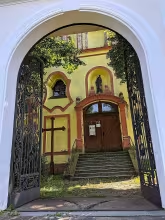
Brána svatého Havla, also known as Svatohavelská brána, was a medieval gate located in Prague's Old Town fortifications on Na Můstku street near the Church of St. Gallus. Constructed in the 1330s, it served as an integral part of the city’s defense system during a period when Prague emerged as a significant center in Central Europe. The gate was notable for its role within a series of defensive structures that included other gates like Brána svatého Ambrože and Brána svatého Martina, reflecting medieval efforts to protect urban centers from invasions.
The fortifications of Prague's Old Town were established in the 1330s, during which Svatohavelská brána was constructed. This period marked a time when Prague expanded its influence and required robust defenses against potential threats. The gate itself was part of these broader medieval efforts to safeguard urban centers from prevalent invasions and conflicts.
Architecturally, the original construction of Svatohavelská brána dates back to the early 14th century as a component of Prague's medieval fortifications. In 1463, it underwent significant reconstruction, indicating its continued importance at that time. This renovation reflects the ongoing need for maintaining and updating defensive structures in response to evolving military technologies and strategies.
Throughout its history, Svatohavelská brána experienced changes in ownership and administration as part of Prague's Old Town defenses. However, specific details about individual owners or administrators are not documented. The gate remained a crucial element of the city’s fortifications until it became redundant following the establishment of New Town by Charles IV.
A key event in the history of Svatohavelská brána was its reconstruction in 1463. This renovation underscores the gate's significance during that period, even as urban development and strategic priorities evolved over time. Despite these efforts to maintain it, the gate was eventually demolished due to redundancy after New Town’s establishment.
Today, Brána svatého Havla no longer stands; its site is a testament to Prague's rich medieval history. While visitors cannot see the original structure, exploring the surrounding area offers insights into the city's historical fortifications and urban development. The proximity to other historical gates and landmarks like the Church of St. Gallus provides context for understanding the strategic importance of Svatohavelská brána in Prague’s past.
Svatohavelská brána holds value as a symbol of medieval urban defense strategies and the dynamic history of Prague's development. Its legacy invites visitors to reflect on the city's evolution and the historical narratives embedded within its streets and structures. Exploring this site offers a glimpse into the past, enriching one’s appreciation for Prague’s enduring heritage.
Historical milestones
- 1330
- Construction of Svatohavelská brána as part of Prague's Old Town fortifications.
- 1463
- Significant reconstruction of Svatohavelská brána.
Architectural development
Svatohavelská brána was originally built in the early 14th century as part of Prague's medieval fortifications. It experienced a significant reconstruction in 1463, reflecting its ongoing importance at that time. The gate stood until it was demolished due to redundancy after New Town's establishment.
Historical events
The fortifications of Prague's Old Town were constructed in the 1330s, including Svatohavelská brána.
In 1463, the gate underwent a reconstruction but was eventually demolished as it became obsolete.
Points of interest
- Despite its significance, Svatohavelská brána was demolished due to redundancy after the establishment of New Town by Charles IV, highlighting how urban development can render even important structures obsolete.
- The gate underwent a significant reconstruction in 1463, reflecting the evolving military technologies and strategies that necessitated updates to medieval fortifications, emphasizing the continuous adaptation required for effective defense.
Guide
Show guide text
Welcome to one of Prague's most intriguing historical sites—the Svatohavelská brána, or the Gate of St. Wenceslas. As you stand here on Na Můstku street, imagine the bustling medieval streets that once surrounded this formidable gate. Though it no longer stands, its legacy is deeply etched into the heart of Prague's Old Town.
The construction of Svatohavelská brána dates back to the 1330s, a time when Prague was fortifying itself against potential threats. This gate was an integral part of the city’s defensive structures, alongside others like Brána svatého Ambrože and Brána svatého Martina. It served as both a protective barrier and a symbol of strength for the burgeoning medieval city.
As you look around this historic spot, take in the atmosphere that once thrived here. The gate's architecture was typical of its time—robust and functional, designed to withstand sieges and provide security. While specific architectural details are lost to history, envision the sturdy walls and heavy doors that would have characterized Svatohavelská brána.
One of the most fascinating chapters in the gate’s story is its significant reconstruction in 1463. This renovation reflects how even medieval structures were subject to change and adaptation as the city evolved. Although the architects remain unknown, their work ensured that the gate continued to serve its purpose for many more years.
Despite its importance, Svatohavelská brána was eventually demolished due to redundancy after the establishment of Prague's New Town by Emperor Charles IV. This highlights a poignant truth about urban development: even vital structures can become obsolete as cities grow and change.
As you reflect on this site’s rich history, consider how it connects to the broader narrative of Prague—a city that has continuously transformed while preserving its heritage. While Svatohavelská brána itself is no longer here, its story invites us to explore further into the Old Town, where many other historical treasures await.
Thank you for joining me on this journey through time. I invite you to continue exploring Prague’s captivating history and uncover more of its hidden gems. Until next time, enjoy your adventure!
Tips for visitors
The best time to visit the site of Svatohavelská brána is during late spring or early autumn when the weather is mild, and the crowds are smaller compared to peak tourist seasons. This timing allows for a more comfortable exploration of Prague's Old Town and its surrounding historical sites. The soft light during these months also enhances the beauty of the area, making it ideal for photography enthusiasts.
While Svatohavelská brána itself no longer exists, getting around to explore its former location is convenient. Visitors can use public transportation or find parking in nearby areas and walk a short distance to Na Můstku street where the gate once stood. For those driving, it's advisable to check for available parking options near Prague's Old Town as spaces can be limited.
When planning your visit, consider bringing comfortable walking shoes as you'll likely explore on foot. A camera or smartphone is recommended to capture the stunning architecture and vibrant atmosphere of the area. Additionally, carrying a water bottle and some snacks can make your exploration more enjoyable, especially if you plan to spend several hours in the vicinity.
For photography enthusiasts, while Svatohavelská brána no longer stands, its location near the Church of St. Gallus offers picturesque views, especially during golden hour when the light is soft and warm. The surrounding streets of Prague's Old Town also provide numerous opportunities for capturing the city's historic charm.
In addition to exploring the site of Svatohavelská brána, visitors should consider visiting nearby historical gates like Brána svatého Ambrože and Brána svatého Martina within a 30-minute walk. These sites offer further insight into Prague's rich history and architectural heritage.
Families with children will find the area around Svatohavelská brána's former site engaging, thanks to its proximity to the Church of St. Gallus and other historical landmarks. Exploring these sites can be both educational and entertaining for kids, offering a glimpse into medieval history in an accessible way.
Businesses nearby
Nearby
Svatohavelská brána was situated in Prague's Old Town, near the Church of St. Gallus and close to other historical gates like Brána svatého Ambrože and Brána svatého Martina.
Accommodation nearby
Trips and activities nearby
Guided tours, tickets and activities nearby from GetYourGuide
Search tours and activities →Themed route
Tematická Výletní Trasa: Historické Brány Starého Města Prahy
1. Svatohavelská brána - Typ: Historická brána - Proč stojí za návštěvu: Svatohavelská brána je jednou z původních bran Starého města Prahy, která sloužila jako vstup do historické části města. Její architektura a umístění odrážejí bohatou historii oblasti a poskytuje pohled na duchovní centrum Starého Města.
2. Kostel svatého Havla - Typ: Katedrální kostel - Proč stojí za návštěvu: Nachází se přímo vedle Svatohavelské brány a je známý svou gotickou architekturou. Tento kostel sloužil jako sídlo pražských arcibiskupů a nabízí vynikající interiér s bohatou historií.
3. Brána svatého Ambrože - Typ: Historická brána - Proč stojí za návštěvu: Tato brána je další z původních bran Starého města a nachází se nedaleko Svatohavelské brány. Její umístění vede k duchovnímu centru, což poskytuje vhled do historického rozvoje oblasti.
4. Brána svatého Martina - Typ: Historická brána - Proč stojí za návštěvu: Brána svatého Martina je další významnou branou Starého města, která se nachází blízko ostatních historických bran. Její architektonické prvky a umístění přispívají k pochopení historické struktury a důležitosti oblasti.
Tato trasa vás provede skrze několik klíčových historických bran Starého města, každá z nich nabízí jedinečný pohled na bohatou minulost a architekturu Prahy.
Seasonal recommendations
Jaro: During the spring season, the historic site around the former St. Wenceslas Gate in Prague takes on a beautiful green hue as trees and shrubs come to life. This time of year is ideal for strolls under a canopy of blooming spring flowers that add a breath of life to the atmosphere of the place. Given the increased number of tourists visiting Prague during this season, it's advisable to arrive early to avoid crowds and ensure enough time to explore nearby landmarks. Clothing should be mild with an option to layer, as spring weather can sometimes be cool and damp.
Léto: Summer in Prague offers long days filled with sunshine, making it ideal for visiting historic sites around the former St. Wenceslas Gate. The sun illuminates architectural elements and adds a dramatic atmosphere to panoramic views of the city center. Due to its popularity during this time, it's recommended to visit the landmark earlier or later in the day to avoid midday crowds. Warm clothing and sun protection are essential; don't forget a hat and skin protection.
Podzim: Autumn provides a unique view of historic sites around the former St. Wenceslas Gate as tree leaves turn into golden and reddish hues. This season is often quieter than spring and summer, allowing for a more intimate exploration of the landmark without large crowds of tourists. Given the cooler temperatures, it's advisable to wear warm clothing, including a coat or scarf. Visiting in the afternoon can be ideal due to pleasant sunlight and beautiful autumn weather.
Zima: A winter visit to the historic site around the former St. Wenceslas Gate offers a completely different atmosphere as Prague transforms into a city covered with snow and illuminated streets. This time of year is perfect for quiet strolls along historical architectural elements, when the city seems at peace. Due to shorter opening hours and cold temperatures, it's important to visit early in the morning or late afternoon when the weather is usually milder. Warm clothing, including a coat and hand and foot protection, is essential to ward off the cold.
Visualizations and artistic views

Vizualizace jsou generovány umělou inteligencí a slouží jako inspirace.

Tips from visitors
No tips yet. Be the first!
Log in and add your tip.
Location on the map




Příběhy a pověsti
Legendy, pověsti a příběhy spjaté s touto památkou
Reviews and comments